
What Is The 5 Largest Port in Sudan?
In the Northeast African region, Sudan is among one of Africa's largest countries, with most of its population dependent on agriculture. Sudan is not a grown economy and is facing a recession.
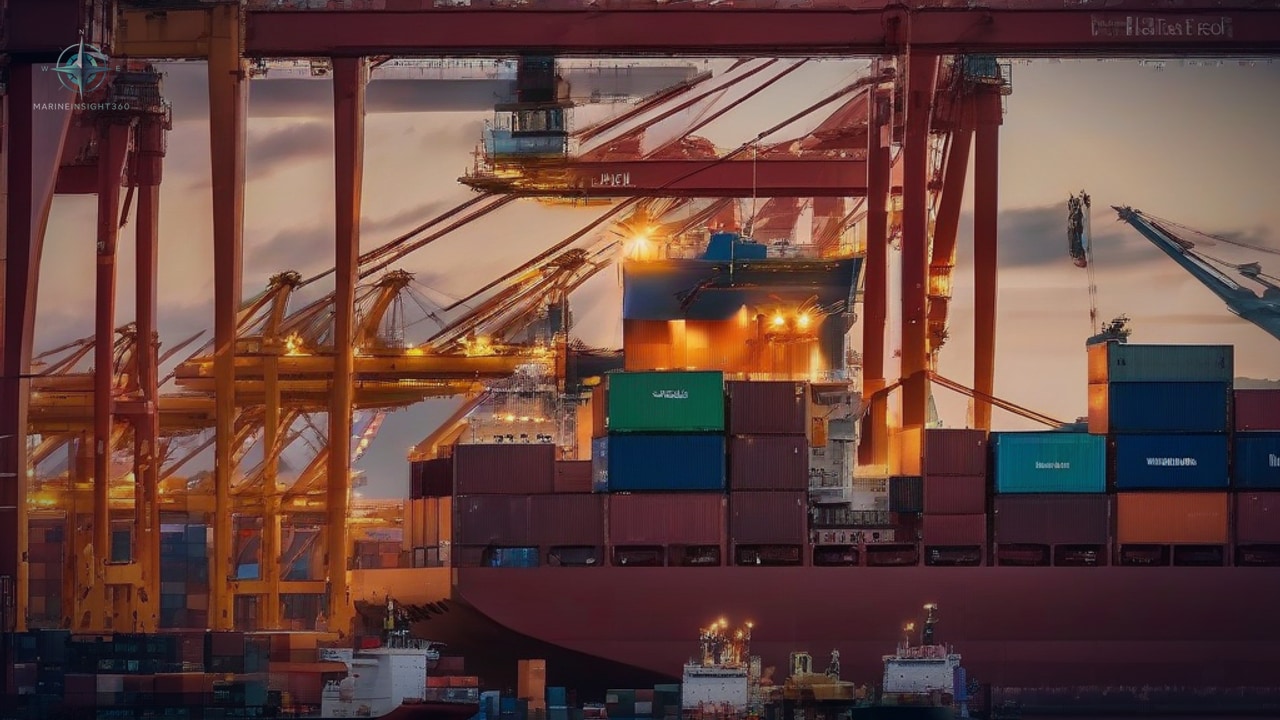
Sudan, in northeast Africa, is one of the largest countries on the continent, and most of its people depend on farming. Its economy was already weak before the current war, and it has shrunk badly since.
The country has valuable natural resources, including oil, gold and farmland, but decades of conflict, coups and shifting political alliances have held it back. Since April 2023 the Sudanese army and the paramilitary Rapid Support Forces (RSF) have been fighting a civil war that has wrecked much of Khartoum, displaced millions of people and pushed parts of the country into famine.
The ports have not escaped. In 2021 protesters from the Beja community blockaded Port Sudan for weeks to press their demands on the government. Since the war began, Port Sudan has served as the temporary seat of the military-backed government and the main entry point for humanitarian aid. In May 2025 RSF drones struck the city for several days, setting fire to major fuel depots and hitting the airport.
Port Sudan
The British founded Port Sudan in the early twentieth century to replace the old harbour at Suakin, and it handled most of the region's colonial trade. Today it is Sudan's main seaport. It lies on the western shore of the Red Sea, several hundred kilometres northeast of the capital, Khartoum, and almost directly across the sea from Jeddah in Saudi Arabia, the other big trading port on this stretch of the Red Sea.
Port Sudan's traditional exports are gum arabic, oilseeds, hides and skins, and senna. Its main imports are machinery, vehicles, fuel oil and other oil products, pesticides and building materials such as cement.
The port became more important in 1977, when a products pipeline was built between Port Sudan and Khartoum. The region is very dry, so the town and port get their fresh water from Khor Arbaat and from nearby water plants.
Port Sudan is divided into five areas:
1) The North Port
This is the oldest part of the port, in use since the early 1900s. It has 12 berths with an average depth of around 11 metres and handles general cargo, cement, edible oil, oil products, vehicles and molasses. Its annual capacity is about 5 million tonnes.
The North Port has six cement silos holding 80,000 tonnes, edible oil tanks holding 50,000 tonnes and molasses tanks holding 100,000 tonnes. Private trading companies own 119 warehouses at the port, and the government owns another 25. Most of the equipment works, although the luffing cranes used for general cargo need repair.
Other equipment includes mobile cranes, shore cranes, tractors, forklifts, quay cranes, tugs, trailers and fire engines.
2) The South Port
The South Port lies on the southern side of the harbour. It has six berths handling grain, general cargo and cargo in containers.
The berths have a combined length of 740 metres and a depth of around 13 metres. Besides containers and grain, the South Port also handles petroleum and oil products.
It covers 1,480,000 square metres and handles about 3 million tonnes of cargo a year. Berth 16 serves tankers, and the container berths have a length of 430 metres and a depth of 13 metres.
There are three dedicated container berths, and one berth has a grain silo holding 50,000 tonnes. The container terminal can handle around 400,000 TEU a year. Its equipment includes gantry cranes, two harbour cranes, rubber-tyred gantries, reach stackers, forklifts and trailers, and most of it is in good condition.
Berths 17 and 18 have been upgraded and fitted with container cranes and RTGs to raise the terminal's capacity and productivity.
3) The Green Port
The Green Port, or Green Harbour, is on the eastern side of Port Sudan. It has a purpose-built dock for cargo vessels.
It handles dry bulk cargo, containers and seeds, and its construction added a good deal of handling capacity to Port Sudan.
The entrance to the dock is about 180 metres wide. The port has two berths with 560 metres of quay and a depth of 15 metres, and can take vessels of around 50,000 tonnes.
4) Al Khair Terminal
This oil terminal lies about 3 kilometres from Port Sudan. It can take tankers of up to 50,000 DWT with a 15-metre draft and has an annual capacity of 2.67 million tonnes.
It was built between 2001 and 2003 to export refined products such as gasoline.
In practice it now works as an import terminal. In 2017, 80 vessels discharged 2,222,600 tonnes of oil products there, and the terminal had not exported any oil for about a decade.
5) Marsa Bashayer Export Terminal
This terminal, about 25 km south of Port Sudan, is the country's main crude oil export terminal.
It is the sea end of the pipeline that brings crude from the Heglig fields and the oilfields further south. Since South Sudan became independent in 2011 and took most of the oilfields with it, much of the crude loaded here comes from South Sudan, which pays Sudan fees to use the pipeline and terminal. A submarine loading line runs from the storage tanks out to the tanker moorings.
The terminal's large storage tanks can hold about half a million barrels of crude.
Port of Osman Digna
The Osman Digna Port is at the old town of Suakin, about 60 km south of Port Sudan. It has nine berths and an annual capacity of about 3 million tonnes. It is mainly a passenger port, with ferries across the Red Sea to Jeddah, and it also ships livestock.
The terminal has two halls, one for arriving and one for departing passengers, and an open area near the arrivals hall for storing luggage. Shipping agents manage it.
Osaief Port
This port, about 250 km from Port Sudan, was once used to export iron ore. It is no longer in working condition.
El.Zoubair.M.Salih also called the Wadi Halfa Port
Wadi Halfa is a small port on Lake Nubia, the Sudanese part of the Nile reservoir behind the Aswan High Dam, near the border with Egypt. Passengers and traders use the ferry service between Wadi Halfa and Aswan.
Kosti Port
Kosti is a river port and logistics depot on the White Nile, south of Khartoum. Before 2011 it was the starting point for river barges to the south.
Unlike ports in many other countries, Sudan's ports have never drawn many tourists.
Because of the war, the country now sees almost no visitors at all. Before the fighting, though, the Red Sea coast around Port Sudan was well known among divers.
The reefs here are rich in coral and marine life, and sites such as the Sanganeb reef and the wreck of the Umbria drew dive boats from abroad, mostly in the cooler months.
Recommended Reading
Jawaharlal Nehru Port: Largest Container Port In India
The port of Jawaharlal Nehru, known as Nhava Sheva, is the largest container port in India and one of the main doors of international trade.
Largest Ships in Maritime History
Find out which vessel holds the record for length, gross tonnage and displacement. Includes specs for Seawise Giant, Pioneering Spirit and Shell Prelude.
Largest Ship Ever Built
Find out why Seawise Giant (Knock Nevis) remains the biggest ship ever built, its dimensions, history and how it compares with modern giants.