
What Is A Fender Used For?
The fender ship are marine equipment specifically designed to protect ports and also ships from collisions with other ships.
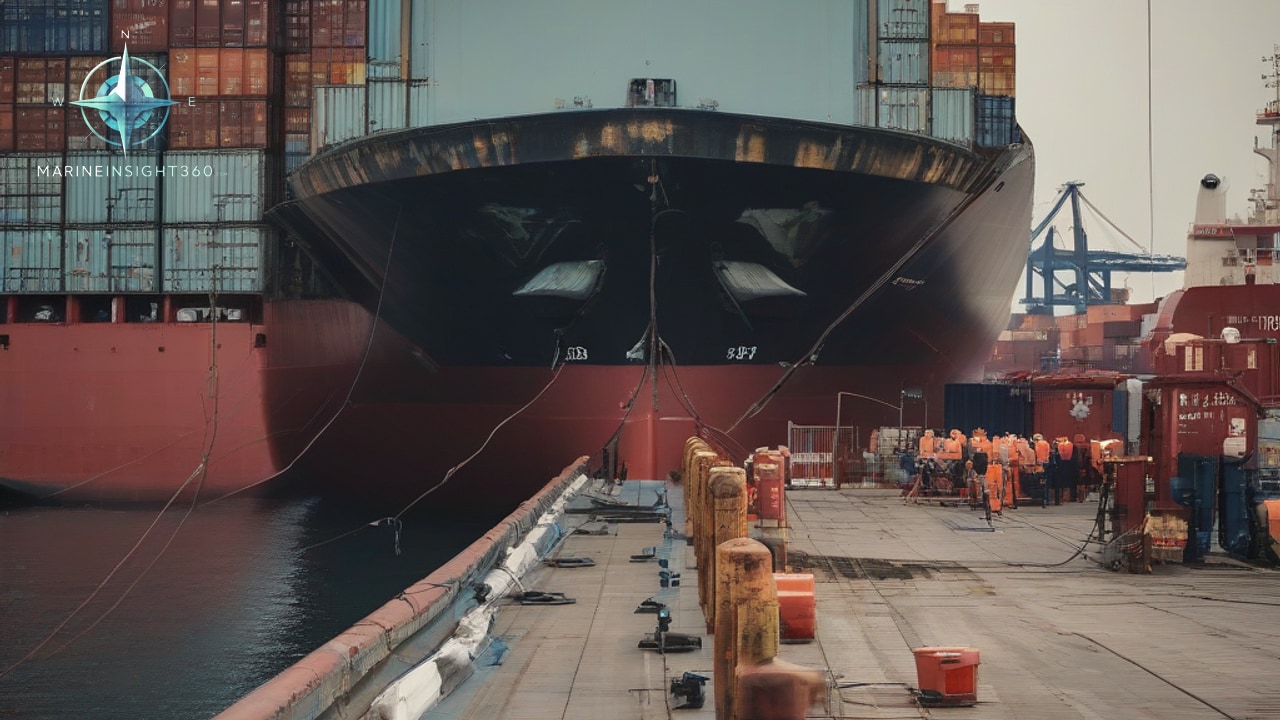
Ship fenders are marine equipment designed to protect ships and port structures from damage when a ship comes alongside. A fender sits between the hull and the quay, pier, jetty or another vessel and absorbs the energy of the contact, so that neither the ship nor the berth is damaged. Fenders are also called marine bumpers. The same principle applies to everything from a dinghy alongside a pontoon to a VLCC berthing at an oil terminal.
Without fenders, every berthing would risk denting shell plating, damaging the quay or injuring people. Fender design has developed a long way, and modern fender systems are engineered to absorb a known amount of berthing energy while keeping the force on the hull within safe limits. Some fenders are carried on the ship or hung over its side, especially on tugs, small craft and ships doing ship-to-ship transfers, while ship fenders of other types are permanently installed on piers, docks, jetties and locks.
Marine Fender
Permanent fender systems are worth most at busy berths, where ships come alongside many times a day and even a gentle contact is repeated thousands of times a year. A good fender system greatly reduces damage to both ships and the berth.
Fenders in some form have been used for centuries, from rope and timber to old tyres, but modern fender systems are designed to standards such as the PIANC guidelines, which set out how to calculate the berthing energy a fender must absorb. Manufacturers now offer a wide range of systems for different ships and berths.
Classification of Marine Fenders
Fenders are classified by their material and construction, and by where they are installed. By material, the main types of fenders for ships are:
- Rubber Fender
- Foam Fender
- Composite Fender
1. Rubber Fender:
Solid rubber fenders come in many shapes, developed to suit different applications, and are designed following PIANC principles. They absorb berthing energy by deforming, keep the reaction force on the hull and the berth within limits, and, when fitted with large steel panels faced with low-friction pads, keep the pressure on the hull low. They are the most widely used fenders at commercial berths. The main types are:
a. Super Cone Fender:
Cone fenders are among the most advanced rubber fenders. Their conical body stays stable even when the ship comes in at an angle, and they absorb a lot of energy for a low reaction force. They resist shear well and can be compressed further than many other designs without damage. They are usually fitted with a steel frontal panel and are common at container, bulk and oil terminals.
b. SCK Cell Fender:
Cell fenders are cylindrical rubber units bolted to the quay, popular because their design is simple and strong. They come in a wide range of sizes and can support large steel panels, which spread the load on the hull. They were the standard high-performance fender at many large berths for decades before cone fenders became widespread.
c. Bow fender:
Arch fenders, named for their arch-shaped cross section, are rubber fenders bolted straight to the quay face. They need very little maintenance, are easy to install, and resist wear and shear well, which makes them a common choice for smaller berths, ro-ro ramps and berths for small to medium-sized vessels. They do their purpose well even in harsh conditions. Versions shaped to fit around a corner are called corner arch fenders.
d. Leg Guard:
Leg fenders have a modular design that makes them easy to install, and they need little or no maintenance. They are mainly used where the space available for mounting is limited.
2. Molded Fender
Foam fenders have a closed-cell polyethylene foam core covered by a tough skin of reinforced polyurethane elastomer. Because the foam is closed-cell, almost no water can get in, and the fender keeps working even if the skin is punctured. Common types include:
a. Sea-Guard fenders:
Foam-filled floating fenders such as the Seaguard type can be used alongside ships or at berths and need little maintenance. They are often used in ship-to-ship operations, and because they are foam-filled they cannot burst or deflate and will not sink if damaged. Foam-filled fenders are commonly made to the US standard ASTM F2192.
b. Sea Cushion Fenders:
These are heavy-duty floating foam fenders intended for harsh conditions, with a higher-grade foam core than standard floating foam fenders. Many are protected by a net of chains and old tyres. Because they cannot burst, they are popular for berthing and ship-to-ship transfers involving gas carriers and tankers, and they need minimal maintenance.
c. Donut fender:
Donut fenders are foam-filled rings that slide up and down around a steel pile as the tide changes. They rotate as a ship moves along them, which makes them useful as guides at the entrances to locks and ferry berths and at turning points. They have a skin of polyurethane reinforced with nylon filament, come in bright colours so they are easy to see, and need very little maintenance.
3. Composite Fenders
Composite fenders combine materials such as rubber, foam, plastic and steel. Most tug fenders fall into this group or are made of very hard-wearing rubber.
a. Tugboat fenders:
Tug fenders are fitted around the bow, stern and sides of tugs, which push against ships' hulls every working day. They take heavy wear and friction, so they are made of the toughest materials available, which gives them a long service life. By shape, tug fenders can be cylindrical, conical, keyhole, D, M or W-shaped.
The shapes do much the same job but suit different positions on the tug: large cylindrical fenders are often used at the bow for pushing, and W or M fenders along the sides and stern, where the tug needs grip as well as protection.
Based On Fender's Position
By position, there are two types.
1. Ship fenders:
These are fenders carried on or hung from ships, for example to keep two ships apart during ship-to-ship transfers. Tug fenders also fall into this category. Because ship fenders move with the vessel and take repeated contact in a seaway, they have to be made of tougher materials than many dock fenders.
2. Dock fender:
A dock fender is installed at a berth to protect ships and the quay while ships berth and lie alongside. Examples include leg fenders and parallel motion fenders. All of them absorb large amounts of kinetic energy, reducing the impact felt by the berth and the ship and preventing damage to cargo and injury to crew.
W Fender:
W fenders are used where a fender must stand up to heavy contact and friction, such as on tugs and work boats that push against larger ships. Other common types include D fenders, cell fenders, cone fenders and pneumatic fenders. Pneumatic fenders, large air-filled rubber floats, are widely used in ship-to-ship transfers and at berths for large tankers.
Precautions When Working On Marine Fenders
A fender has to be soft enough to absorb kinetic energy and limit the force on the hull, yet strong enough to survive repeated impacts, and floating fenders must not burst in service. Check fenders regularly for cracked rubber, torn skins, damaged panels and corroded fixings, and include them in planned maintenance work. Hanging fenders should be secured so they cannot drop or swing while crew are working near them, and no one should stand between a fender and a hull as a ship comes alongside. Well-maintained fenders, on the ship and at the berth, are one of the simplest ways to prevent damage during berthing.
Recommended Reading

Diwali at Sea: Far from Home, Together as One Crew
What Diwali looks like on a merchant ship: a crew of different faiths and nationalities celebrating together, thousands of miles from home.

Ramadan at Sea: Fasting, Prayer and Watchkeeping for Muslim Seafarers
A practical guide to Ramadan on board: fasting and watchkeeping, rest hours, suhoor and iftar timings across time zones, galley, prayer and Eid.

Ship Earthing Systems: Insulated Networks, Bonding and Earth-Fault Monitoring
Why ships use insulated electrical systems, how earth faults are found, high-voltage resistance earthing, bonding, tanker rules and shore power.