
What is the IMSBC Code?
The carriage of solid bulk cargoes on board bulk carriers involves a number of risks that must be properly managed to ensure the safety of the vessel and its crew on the high seas.
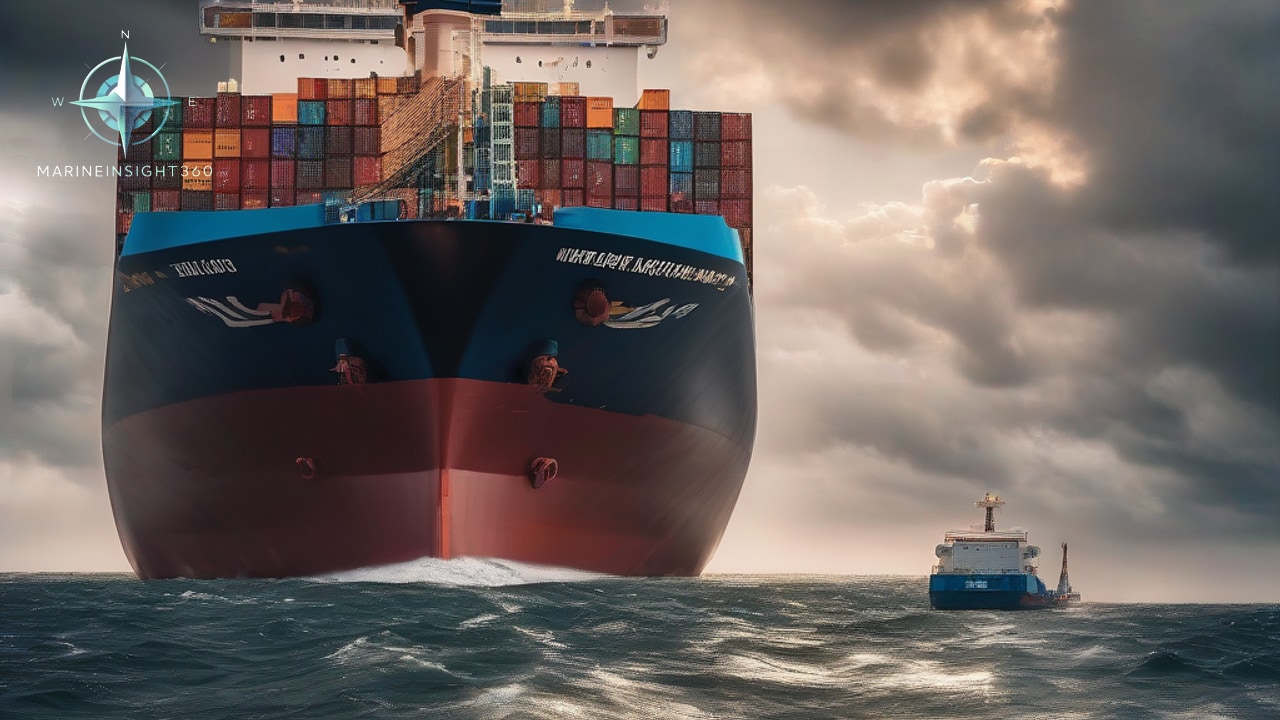
IMSBC Code, the International Maritime Solid Bulk Cargoes Code
Carrying solid bulk cargoes on bulk carriers comes with risks that have to be managed to keep the ship and crew safe. The main ones are loss of stability, capsizing when a cargo liquefies, fire or explosion from cargoes with chemical hazards, and structural damage from poor loading.
The IMSBC Code, the International Maritime Solid Bulk Cargoes Code, sets the rules for carrying solid bulk cargoes safely. It became mandatory on 1 January 2011 under Chapters VI and VII of the International Convention for the Safety of Life at Sea (SOLAS). Some national rules, the Netherlands' among them, also apply it to seagoing ships of less than 500 gross tonnage.
Importance of the International Solid Bulk Cargoes Code (IMSBC Code)
The IMSBC Code replaced the older Code of Safe Practice for Solid Bulk Cargoes (BC Code). It gives the procedures for loading, trimming, carrying and discharging solid bulk cargoes, and it sets out the hazards of individual cargoes and what to do about them.
The Code does not cover bulk grain, which falls under the International Code for the Safe Carriage of Grain in Bulk (the International Grain Code, 1991). Despite the similar name, that is a different instrument from the International Code of Signals.
The IMO amends the IMSBC Code every two years. Successive amendments have tightened the requirements for cargoes that may liquefy, whose moisture content must stay below the transportable moisture limit (TML).
Amendment 07-23, adopted in June 2023, became mandatory on 1 January 2025. Among other changes, it added new cargo entries to the Code.
Cargo categories in the IMSBC Code
The IMSBC Code divides cargoes into three groups.
Group A: cargoes that may liquefy if they are shipped with a moisture content above their transportable moisture limit (TML). The ship's motion can turn such a cargo into a slurry that flows to one side and makes the ship list or capsize.
Group B: cargoes with chemical hazards that could create a dangerous situation on board, such as self-heating, toxic gases, oxygen depletion, flammable gases or dust explosions.
Group B cargoes fall into two types:
Dangerous goods classified under the International Maritime Dangerous Goods Code (IMDG Code), which are hazardous in any form of transport.
Materials hazardous only in bulk (MHB), which have chemical hazards when carried in bulk but are not classified as dangerous goods under the IMDG Code.
A cargo classified under the IMDG Code may also have additional MHB hazards when carried in bulk.
Appendix 1 of the IMSBC Code contains an individual schedule for each listed cargo, giving its characteristics, hazards, stowage and segregation requirements, and precautions.
Group C: cargoes that are neither liable to liquefy (Group A) nor chemically hazardous (Group B).
Groups A and B: some cargoes have both kinds of hazard and are listed in both groups.
Before loading, the shipper must give the master a cargo declaration with the information needed to carry the cargo safely.
Cargoes covered by the IMSBC Code include coal, ores such as bauxite and iron ore, sulphur, direct reduced iron, fertilisers such as urea, wood pellets and ammonium nitrate.
Test Certificates
The IMSBC Code requires test certificates for certain cargoes, for example moisture content and TML certificates for Group A cargoes. In the Netherlands, the testing must be done and certified by a laboratory recognised there. What has to be tested, and when, depends on the cargo's group and the conditions of transport.
Dutch rules allow some exceptions when a laboratory recognised in the Netherlands can't do the test:
1. If the cargo is shipped directly from the country of origin, a test carried out in that country is accepted, provided the laboratory is recognised by that country's competent authority and proof of the recognition is supplied.
2. If the cargo is transshipped in the Netherlands and continues its voyage, a test carried out in another EU member state is accepted, again provided the laboratory is recognised by that country's competent authority and proof is supplied.
IMSBC Code Requirements for Group A Cargoes
Group A cargoes can liquefy and shift, which can capsize a ship or lead to its total loss, so the Code sets out procedures to prevent it.
Before shipment, a Group A cargo is tested to find its transportable moisture limit (TML), the maximum moisture content at which it is considered safe to carry, and its actual moisture content. The TML test must be done within six months before loading, and the moisture content test as close to loading as practicable and not more than seven days before. The actual moisture content must be below the TML.
The shipper must give the master signed certificates of the TML and of the actual moisture content.
To reduce the risk of liquefaction, the ship should:
Check that the shipper has supplied all the required information, including the TML and moisture content certificates.
Only accept the cargo if the actual moisture content is below the TML.
Watch the cargo during loading, and stop if it looks wetter than declared. A simple can test on deck can give a warning, though it is not a substitute for laboratory testing.
Trim the cargo reasonably level to reduce the risk of shifting, and keep rain, sea water and other liquids out of the holds.
Typical Group A cargoes include mineral concentrates of copper, iron, lead, nickel and zinc.
IMSBC Code requirements for Class B cargoes
As described above, Group B cargoes are either dangerous goods in solid form in bulk (classified under the IMDG Code) or materials hazardous only in bulk (MHB).
Solid dangerous goods in bulk fall into these IMDG classes:
Class 4.1: Flammable solids
Class 4.2: Substances liable to spontaneous combustion
Class 4.3: Substances which, in contact with water, emit flammable gases
Class 5.1: Oxidizing substances
Class 6.1: Toxic substances
Class 7: Radioactive material
Class 8: Corrosive substances
Class 9: Miscellaneous dangerous substances and articles
Class B cargoes
The MHB category includes:
- Combustible solids
- Self-heating solids
- Solids that evolve flammable gas when wet
- Solids that evolve toxic gas when wet
- Toxic solids
- Corrosive solids
Examples of Group B cargoes include coal, direct reduced iron, metal sulphide concentrates, seed cake, ammonium nitrate-based fertilisers, and wood products such as logs, pulpwood and sawn timber, which can deplete the oxygen in a closed hold.
A ship carrying solid dangerous goods in bulk must hold a Document of Compliance for the carriage of dangerous goods, issued by the flag state or a classification society on its behalf.
The master must also have a dangerous goods cargo manifest or stowage plan showing where the cargo is stowed, and emergency response information must be readily available on board.
Many Group B cargoes are incompatible with each other or with other goods and must be segregated as the Code requires.
Risk Mitigation Measures Associated with Class B Cargoes
The individual schedule and the shipper's information say what precautions a Group B cargo needs. Common ones include the following.
To prevent fire or explosion, the holds and nearby enclosed spaces may need ventilation, in some cases with fans of a certified safe type, and the hold atmosphere may have to be monitored with gas detectors.
Ventilation also helps keep toxic gas from building up. The type of ventilation required depends on the cargo and the gas it gives off.
Some cargoes are corrosive, so the schedule may require the hold to be clean and dry, and sometimes coated or lime-washed, before loading to protect the steel.
Class C cargo requirements under the IMSBC Code
Group C cargoes don't carry the liquefaction or chemical hazards of Groups A and B, but they still need care.
Examples include dense cargoes such as some ores and metal products, sand, cargoes that produce fine dust (such as silica, which damages the lungs if inhaled), and cement.
Very dense cargoes can overload the tank top if they are piled in one place. The cargo has to be spread so that the tank top and the hull structure are not overstressed, and the loading sequence has to keep the stresses within limits.
Machinery spaces and accommodation must be protected from cargo dust, and cargo must be kept out of the bilges and ballast tanks.
Crew exposed to cargo dust should wear goggles and other protective equipment, such as dust masks and protective clothing.
For a cargo listed in Appendix 1 of the IMSBC Code, the ship must follow both the general provisions of the Code and the cargo's individual schedule. The schedule gives the cargo's characteristics and hazards and any special requirements for stowage, segregation, hold cleanliness, weather precautions, loading, ventilation, carriage, discharge and emergencies.
If the solid bulk cargo is waste
A solid bulk cargo may also count as waste. Waste shipped across borders from or through the EU falls under the EU Waste Shipment Regulation (known in the Netherlands as EVOA, and also as EWSR), and the paperwork under that regulation must be completed before the ship sails.
Approval under the waste shipment rules is separate from the requirements for carrying the material as a solid bulk cargo.
If the material is listed in Appendix 1 of the IMSBC Code, it can be carried as a solid bulk cargo under its schedule. If it is not listed, the process for unlisted cargoes below applies.
Cargo Handling and Transportation Certificate
If a cargo is not listed in the IMSBC Code, the shipper must give the competent authority of the port of loading the cargo's properties. If the authority finds that the cargo may liquefy or has chemical hazards (Group A or B), the competent authorities of the port of loading, the flag state and the port of discharge must agree provisional conditions for carrying it, often called a tripartite agreement.
The competent authority of the port of loading then issues a certificate giving the cargo's characteristics and the conditions for carriage, which goes with the ship.
For Group C cargoes, no tripartite agreement is needed. The competent authority of the port of loading can authorise the carriage and set the conditions itself, and it must notify the IMO. The shipper should contact the maritime authority of the loading country to start the process.
The IMSBC Code is published by the International Maritime Organization (IMO) and is mandatory under SOLAS. It sets standards for loading, stowing and carrying solid bulk cargoes to reduce the risks of cargo shift, liquefaction, fire and toxic gas that threaten crews, ships and the marine environment. Following it properly is a basic part of running a bulk carrier safely.
Recommended Reading
International Code of Signals (INTERCO)
The International Code of Signals (INTERCO) is an international communication system used by seafarers aboard ships to convey important information…
Marine Fire Safety: What the FSS Code Requires on Every Ship
How marine fire safety works under the FSS Code: fire mains and pumps, fixed gas and sprinkler systems, detection, escape gear and the drills that bind it all.
Port Facility Security Officer (PFSO): Role and ISPS Code Duties
What a Port Facility Security Officer does, why every port facility serving international ships must appoint one, and what the ISPS Code requires.