
What is the Effect of Wind and Current on Ship Handling?
Navigating a ship on the open sea is a complex task in which the environment is strongly influenced by wind and ocean currents.
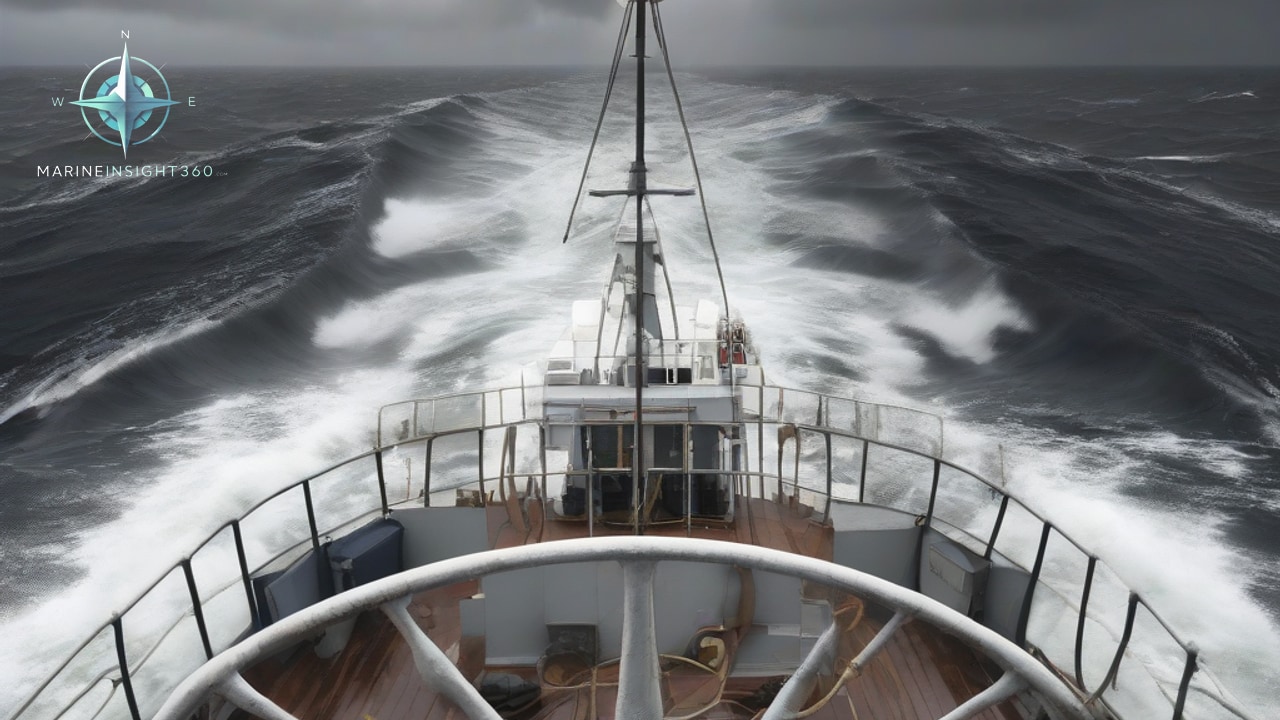
Wind and current act on a ship all the time, and a ship handler has to allow for both, especially in port. Below, step by step, is how each affects the ship and what the bridge team does about it.
Step 1: Understand the Effects of Wind Strength and Direction
Force Coefficient
The wind force on a ship depends on the wind speed and on how much of the ship is exposed above the waterline (its windage). It rises with the square of the wind speed, so doubling the wind roughly quadruples the force.
It can be estimated with the formula: Force = 0.5 × ρ × Cd × A × V², where ρ is the air density, Cd is the wind force coefficient for the ship's shape and the angle of the wind, A is the area exposed to the wind, and V is the relative wind speed.
Effect of Direction
Direction matters as much as strength. A beam wind pushes the ship sideways, while a head or following wind mainly changes its speed.
Step 2: Effects on Ship Motion: Lateral Drift
Leeway Effect
Wind on the side of the ship pushes it sideways, and this drift is called leeway. How much leeway a ship makes depends on its hull design and windage, the wind strength and the ship's speed. A high-sided car carrier or a ship in ballast makes far more leeway than a loaded tanker, and the slower the ship goes, the more the wind takes charge.
Compensatory Measures
The officer counters leeway with rudder, engine or both, and in open water by steering a course a few degrees into the wind so the ship makes good the intended track.
Turning and Maneuvering
Wind Turning
Strong wind on the side can also turn the ship, because the wind acts on the superstructure and the water resists at the hull's pivot point, and the two rarely line up. Depending on the ship and its speed, the bow may turn into the wind or fall away from it, and the helmsman has to carry weather or lee helm to hold the heading.
This has to be anticipated in confined waters and narrow channels, where there is little room to recover.
Step 3: Analyze the Effects of Current: Water Flow and Velocity
Current Strength
Current affects the ship's speed and track over the ground. The force of the water on the hull can be estimated the same way as wind force, using the water density, the underwater area of the hull facing the flow and the current speed. Because water is about 800 times denser than air, even a weak current exerts a large force.
In open water a uniform current simply carries the whole ship with it (set and drift), but when the ship is alongside, at anchor or passing through areas where the current changes, it pushes and turns the hull directly.
Variable flows
Currents change in strength and direction with the tide, the shape of the coast and the seabed, river outflow and local conditions.
Margin and Drift Correction
Combined Effect
Wind and current act together. When they push the same way, leeway and set add up; when they oppose each other, they partly cancel. The navigator has to keep adjusting course and speed to allow for both.
Step 4: Challenges in Port Operations: Docking and Berthing
Wind Drifting
Wind makes berthing difficult because at low speed the ship has little steerage and drifts easily. When approaching a berth, the master and pilot plan for how much and in which direction the wind will set the ship, and whether it will push the ship onto the berth or off it.
Tugboat Support
Tugs are used to control the ship and berth it safely and accurately, especially in strong winds, and more or bigger tugs are ordered as the wind gets up.
Narrow Canals and Bridges
Wind Effects in Narrow Areas
Passing through narrow canals and under bridges in a strong wind calls for extra care. There is little room for leeway, so the ship has to be handled precisely.
Communication and Planning
Safe passage depends on good communication within the bridge team and with the port or canal authority. The effect of wind should be planned for well in advance, including the wind limit at which the transit will be postponed.
Step 5: Advanced Ship Management Technologies: Predictive Modeling and Simulation
Technological Solutions
Some modern navigation systems use predictive models to show how wind and current will affect the ship. They combine real-time weather data with the ship's characteristics to forecast its track.
Simulation Training
Officers train in ship-handling simulators to practise handling ships in different wind and current conditions. The simulators recreate realistic situations, so mistakes can be made and learned from without risk.
Dynamic Positioning Systems
Automated Solutions
Some vessels, mainly in the offshore industry, use dynamic positioning (DP), which holds the ship's position and heading with its thrusters and propellers instead of anchors. The DP system measures wind, current and the ship's movement and adjusts the thrust automatically to keep the ship on station.
Step 6: Continuous Monitoring and Adjustment: Real-time Monitoring
Navigation instruments, weather forecasts and real-time data have to be watched continuously so the ship can respond as wind and tide change. The anemometer, the speed log andGPS are the main tools for this.
Bridge Team Communication
Everyone on the bridge should know what the wind and current are doing. Regular updates let the team make decisions together.
Course Adjustment
Dynamic Planning
Officers keep adjusting course, speed and engine power as they assess the wind and current. The plan has to change as the conditions do.
Adaptability
A good shiphandler reacts quickly when conditions change and relies on experience and judgement to make timely decisions. Good Ship Handling in wind and current is a skill seafarers build over their seafaring careers, and a well-trained, alert bridge team is what keeps maritime operations safe.
Recommended Reading
What are Anabatic and Katabatic Wind?
In addition to atmospheric conditions, a region's geography and topography also significantly influence local weather conditions.
How Does A Wind Indicator Help With Navigation?
Wind indicators are used on ships and boats to determine the direction of the wind. It is also known as a "wind indicator". A wind indicator uses a wind vane to determine the correct wind direction at sea.
List Of Warehouse Material Handling Equipment (MHE) Used for Cargo
In a warehouse, goods are handled manually or also with automatic machines.