
What are the 5 Major Ports in Oman
The five major ports in Oman are Salalah, Sultan Qaboos in Muscat, Duqm, Sohar and Qalhat, which between them handle container transshipment, cruise calls, dry docking, bulk cargo and LNG export.
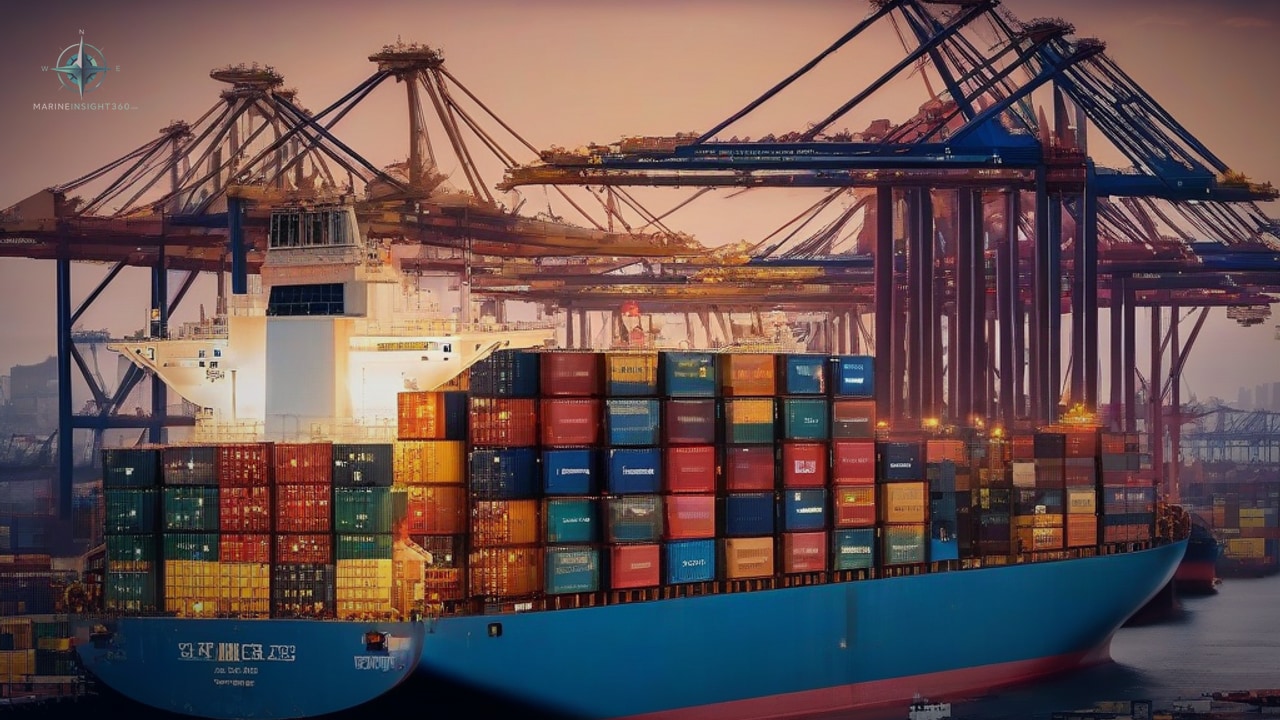
The five major ports in Oman are Salalah, Sultan Qaboos in Muscat, Duqm, Sohar and Qalhat, which between them handle container transshipment, cruise calls, dry docking, bulk cargo and LNG export.
Omanhas a long coastline on the Gulf of Oman and the Arabian Sea, just outside the Strait of Hormuz and close to the main east-west shipping lanes, and large reserves of oil, gas and minerals. Crude oil and gas leave its terminals by oil tanker and gas carrier, while its container ports compete for transshipment traffic with Jebel Ali and the other Gulf hubs. Omani ports handled more than 137 million tonnes of cargo in 2024, about 15% more than in 2023, carried in bulk, as liquids and in Containers. Because the ports sit outside the Strait of Hormuz, they also give Gulf trade a route that avoids the strait.
Thousands of ocean-going ships call at Omani ports every year; Sohar alone recorded more than 3,000 vessel calls in 2024. This article looks at the five main ports: where they are, what they handle and how they are run.
Five Major Ports In Oman
1. Port Of Salalah (Dhofar Governorate, Oman)
UN/Locode: OMSLL
Latitude: 16.94° N
Longitude: 54.00° E
The Port of Salalah, on Oman's south coast, opened its container terminal in 1998 and is the country's main transshipment hub. It is run by Salalah Port Services, a listed company in which the Omani state and APM Terminals are major shareholders. Besides the container terminal, there is a general cargo terminal that handles bulk minerals, liquids and project cargo. Its position close to the main shipping lane between Asia, the Middle East and Europe is what makes it attractive to the big container lines. In the World Bank's Container Port Performance Index it has ranked second among the world's most efficient container ports for three years running, behind Shanghai's Yangshan terminal in the 2023 edition.
Cargo Throughput
Container volumes depend heavily on what the shipping lines do. Salalah handled about 3.8 million TEU in 2023, fell to about 3.3 million TEU in 2024 as the Red Sea crisis rerouted services, and recovered to about 4.3 million TEU in 2025, with monthly records in the second half of the year. The container terminal has a row of ship-to-shore gantry cranes able to work the largest container ships, and deep berths and a deep approach channel to suit them.
Salalah also receives cruise ships, mostly in the winter season.
Network And Layout
The port employs a large local workforce and is the centrepiece of the Salalah Free Zone, where industries using the port have set up. A recent terminal expansion raised its container handling capacity. Unlike the other ports on this list, Salalah depends mainly on containers, so container stacking yards take up much of its area.
2. Sultan Qaboos Port (Muscat, Oman)
UN/Locode: OMOPQ
Latitude: 23.63° N
Longitude: 58.57° E
Sultan Qaboos Port at Mutrah, in Muscat, was for decades Oman's main commercial port. In 2014 the government moved its container and general cargo business to Sohar, and the port has since been redeveloped as a tourism port for cruise ships, with a waterfront project around it. The old commercial berths along the port's main quay once handled containers, general cargo and bulk. Moving cargo out of the capital also took heavy trucks off Muscat's roads, and the space freed up is being used for cruise ship traffic and leisure.
Cargo Handling
Before the move, the port was one of the main grain import points on the coast, supplying the flour mills next to the port, and it also handled cement and other dry bulk with grab cranes. Some of this activity, such as grain for the mills, continued for a time after container operations left.
Network And Layout
The plan to turn the port into a tourist destination was announced in 2014, and the transition has gone ahead in stages. Today the port is Oman's main cruise gateway, and most cruise passengers to the country arrive here.
3. Duqm Port (Al Wusta Region, Oman)
UN/Locode: OMDQM
Latitude: 19.67° N
Longitude: 57.71° E
Duqm, on the Arabian Sea coast roughly halfway between Muscat and Salalah, is Oman's newest major port. It began commercial operations in 2012 and sits within the Special Economic Zone at Duqm, which also includes a refinery, a large ship repair yard and industrial areas. The port is run by a joint venture between Oman's state logistics group Asyad and a Belgian consortium led by the Port of Antwerp.
Duqm also has a defence role: the United Kingdom and India both have agreements giving their navies access to the port and its dry docks.
Cargo Handling
The port has terminals for containers, dry bulk and general cargo, plus a government berth and a liquid jetty serving the refinery. Next to it, the Duqm ship repair yard, one of the largest in the region, has two large dry docks and repairs merchant ships as well as visiting warships.
Network And Layout
Duqm was built as a deep-water port with a long breakwater, and it was laid out with room to grow as the economic zone around it develops, with separate areas for bulk cargo and for a multipurpose container terminal able to take large ships.
4 Sohar Port (Al Batinah Region, Oman)
UN/Locode: OMSOH
Latitude: 24.50° N
Longitude: 56.62° E
Sohar, on the Batinah coast north-west of Muscat, is Oman's largest port by cargo volume. It handled 75.4 million tonnes in 2024 and recorded more than 3,000 vessel calls. The port opened in 2004 and is run by Sohar Port and Freezone, a 50/50 joint venture between the Government of Oman and the Port of Rotterdam. Next to the port is a large free zone that attracts industrial investment. The port offers bunkering for ocean-going ships.
Cargo Handling
Sohar has terminals for containers, dry bulk, liquid bulk and general cargo. Its best-known facility is the Vale iron ore distribution centre, one of the few terminals in the world built to take Valemax ore carriers of about 400,000 deadweight tonnes. Container traffic grew after Muscat's cargo business moved here in 2014, and Sohar handled about 942,000 TEU in 2024. Bulk cargo moves to the industries around the port by conveyor and road.
Network And Layout
Around the port is a heavy industrial zone with an aluminium smelter, a steel plant, a refinery and petrochemical plants, all fed through the port. The free zone covers several thousand hectares, and the layout of the berths reflects the industries they serve, with dedicated terminals for alumina, oil products and other cargoes.
5. Qalhat Port (Ash Sharqiyah Region, Oman)
UN/Locode: OMQAL
Latitude: 22.66° N
Longitude: 59.43° E
Qalhat, near Sur in eastern Oman, is the country's LNG export terminal. It serves the Oman LNG plant, which liquefies natural gas piped from the interior and loads it onto gas tankers for customers mainly in Asia. Oman LNG is majority owned by the Government of Oman, with international energy companies as partners. The terminal includes facilities for handling hazardous cargo.
Cargo Handling
The terminal has LNG loading berths for large gas carriers. Because it handles only liquefied gas, there are no cargo cranes: LNG flows from the plant's storage tanks through insulated pipelines and loading arms on the jetty into the ship. All of Oman's LNG exports go out through Qalhat.
Network And Layout
The loading jetty is T-shaped. The plant's large insulated LNG storage tanks take up much of the site, and the liquefaction process needs a lot of power to keep the gas at about minus 162°C.
The port facility has its own strict security arrangements, as any LNG terminal does. Oman's maritime position, its natural resources and its links with trading partners in Asia and the West make its ports important beyond the country's own trade, and Oman continues to invest in them as gateways for the wider region.
Recommended Reading
Which Are The Major UAE Ports?
Bordered by Oman and Saudi Arabia, the UAE has become a beacon of development and trade on the Arabian Peninsula. It shares seas with Qatar to the west…
What are the 5 major ports of Bahrain?
Bahrain is an island nation near the western coastline of the Arabian Gulf. It comprises 50 natural and 33 artificial islands. Bahrain is the third…
What Are The 10 Major Ports in Mexico?
Mexico is located in the southern part of the North American continent. And also, is the world's 10th most populous country. It is a developing country, classified as an upper-middle-income country by the World Bank.