
Overview of Sea Shanties: Their Various Types
Sea Shanties have a long and fascinating history, chronicling the stories, trials, and triumphs of life at sea.
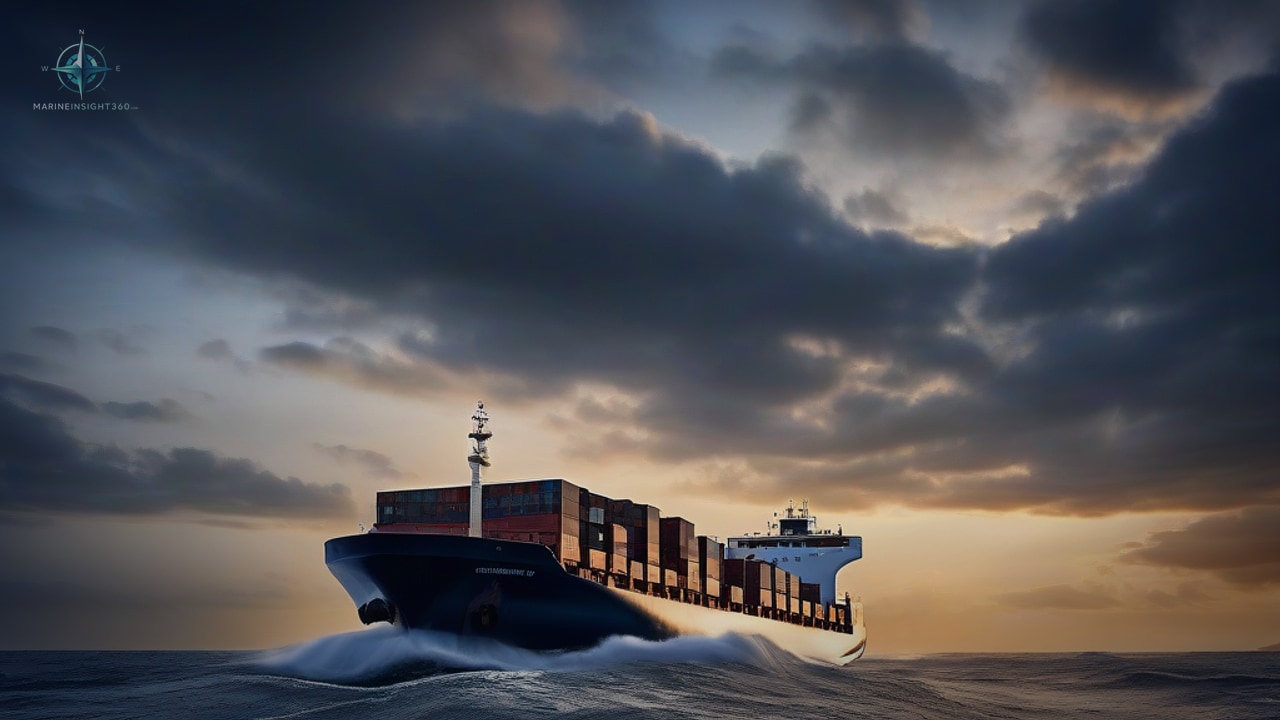
Sea shanties are the rhythmic work songs sailors used to synchronise shipboard tasks, and their main types are halyard, capstan, pumping, short-drag, call-and-response and long-haul shanties.
What are Sea Shanties?
"What shall we do with the drunken sailor, early in the morning?" Most people know at least one shanty, even if they have never been near a sailing ship.
Shanties were passed from crew to crew by ear, and each ship's shantyman added verses of his own, so most songs exist in dozens of versions. The words tell of hard work, bad food, rough captains, homecoming and the ports the ships traded to, and the songs give a good picture of life before the mast.
Sea Shanties
The word "shanty" probably comes from the French "chanter," meaning "to sing." Shanties are folk songs from merchant sailing ships, and they had a practical job: keeping a gang of sailors pulling or pushing together.
The rhythm let the crew time their effort when hauling on ropes, hoisting sails, heaving up the anchor or working the pumps. The word itself only appears in print in the mid-19th century, but sailors sang at their work long before that. The songs drew on English and Irish folk music, on African American work songs and on the music of the many nationalities that crewed merchant ships.
Shanty or Shantey?
The word is also spelled "chanty," "chantey" or "shantey," and all of these spellings are accepted. "Shanty" is the usual British spelling, while "chantey" is more common in the United States, closer to the French root.
Types of Shanty
Shanties are classed by the job they were sung for, and the tempo and structure of each type match the work.
Halyard Shanties
Halyard shanties were sung when hoisting a heavy yard and its sail. The crew hauled on the halyard in short bursts, pulling together on one or two stressed words in each chorus and resting while the shantyman sang the next line. They are steady and fairly slow, which gave the men time to get a fresh grip. "Blow the Man Down" and "Whiskey Johnny" are well-known halyard shanties.
Capstan Shanties
Capstan shanties were sung while walking round the capstan, a vertical drum turned by men pushing on bars, used to raise the anchor and for other heavy lifting jobs. The work was continuous, so these songs have a steady marching beat and long choruses. The shantyman led the song and set the pace, and the crew stamped round in time. "Shenandoah," "Rio Grande" and "South Australia" are classic capstan shanties.
Pumping Shanties
Pumping shanties were sung at the ship's pumps. Wooden ships always leaked, and in heavy weather the crew might spend hours a day pumping water out of the bilges by hand. A rhythmic song kept the pump handles going in unison. "Leave Her, Johnny," traditionally sung at the pumps at the end of a voyage, is the best-known example.
Short Drag Shanties
Short drag (or short haul) shanties were used for jobs needing a few hard pulls, such as sweating up a sheet or a bowline. They are short, with a fast tempo, and the crew heaved together on one word in each chorus. "Haul on the Bowline" and "Haul Away, Joe" are short drag shanties.
Chantey-Call-and-Response Shanties
Almost all shanties use call and response: the shantyman sings a line and the crew answers with the chorus. The shantyman was usually a sailor picked for his voice and his ability to make up verses. The pattern let him time the crew's effort exactly, because the pull or push came on the chorus. "Blow the Man Down" is a typical example.
Long-Haul Shanties
Long-haul or long-drag shanties were sung for longer hauling jobs, such as hoisting topsails, where the crew pulled at regular intervals for many minutes. They have longer verses and two pulls in each chorus, which kept the work steady. Long-drag is in practice another name for the halyard shanty, and "Blow the Man Down" again fits here.
Difference Between Sea Shanties and Sea Songs
Shanties were work songs, sung only while working, to coordinate the effort and keep spirits up. Sea songs, also called forebitters, were sung for pleasure in the dog watches or ashore, and told stories of battles, love, whaling and life at sea. "Spanish Ladies" and "Rolling Down to Old Maui" are sea songs, not shanties.
The Science of Sea Shanties
Shanties suit hard physical work. The repeated rhythm helps the singers control their breathing and move together, which puts the whole gang's weight on the rope at the same moment. A familiar chorus also makes long, tedious work easier to bear. The science behind this is simple: a group pulling in time delivers more force than the same people pulling at random.
Do sailors still sing sea shanties?
Collectors have recorded several hundred shanties. Shanty singing reached its peak in the mid-19th century, on the packet ships, clippers and big square-riggers of the last decades of commercial sail. As steamships replaced sailing ships, and winches replaced hauling gangs, the songs lost their purpose. Today shanties are sung for entertainment and as part of maritime heritage rather than to get work done.
Do sea shanties only happen at sea?
Shanties were sung aboard merchant ships, whalers and packet ships, and some were also used ashore by dock workers and fishermen hauling nets. The tradition is still alive in seafaring communities and at maritime festivals around the world, and shanties had a burst of popularity online in 2021.
Sea Shanties in different cultures
The shanties we know come mostly from British and American ships, but crews were mixed, and the songs picked up influences from many places.
African Influences Shanties
African American work songs had a strong influence on shanties. The call-and-response pattern, and the habit of singing in time to collective labour, came in part through Black sailors and through the dock workers who loaded cotton in southern US ports, from whom sailors learned many songs.
British Sea Songs
British sailors made up a large share of merchant crews, and their seafaring traditions gave the genre many of its songs. British songs often tell of life aboard and of the hardships sailors faced. Examples include "Haul Away, Joe" and the sea song "Spanish Ladies."
American Sea Songs
American sailors added their own songs, many from the whaling fleet and the transatlantic packet trade, with influences from American folk music. Well-known American examples include "Shenandoah" and the whaling song "Rolling Down to Old Maui."
Australian Sea shanties
Australia's links with the shanty come from the wool and grain ships that sailed between Britain and Australian ports. "South Australia," a capstan shanty sung on those ships, is the best-known Australian maritime song of the kind.
Shanties today
The same themes run through shanties from every tradition: hard work, poor pay, the ship and the ports at the end of the voyage. The songs outlived the sailing ships they were written for, and they are still sung by people who have never pulled on a halyard.
Recommended Reading
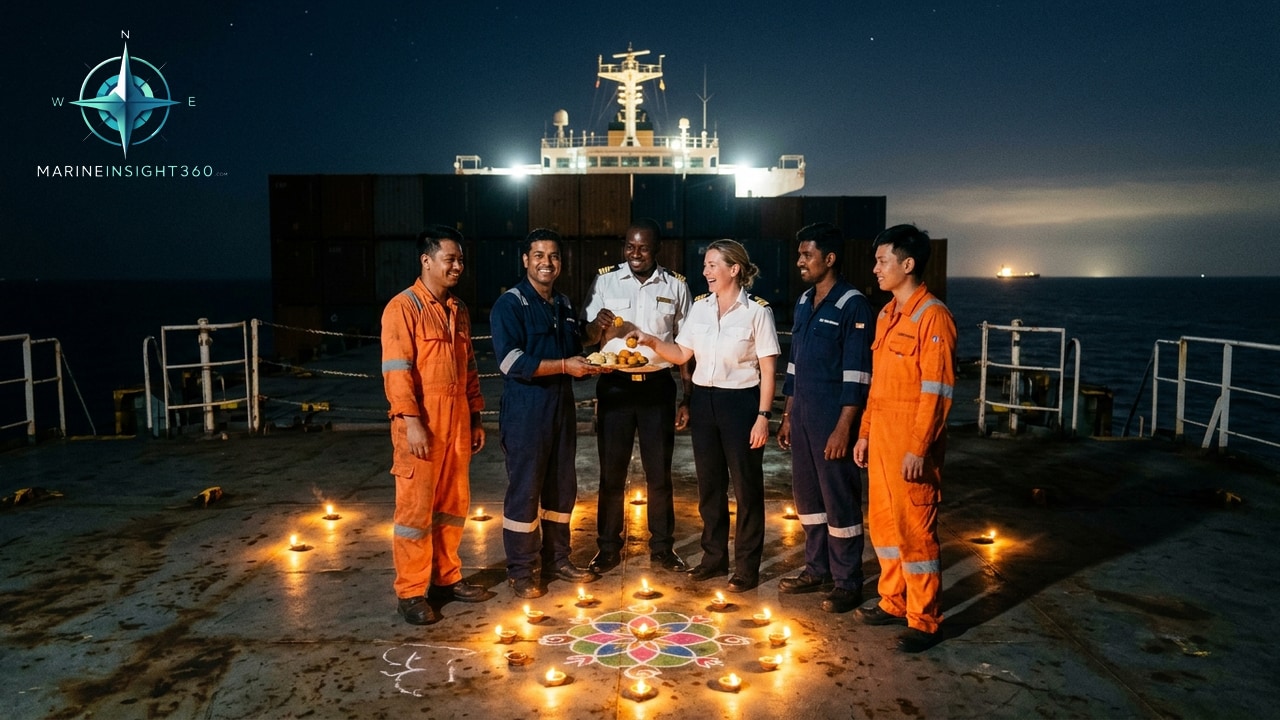
Diwali at Sea: Far from Home, Together as One Crew
What Diwali looks like on a merchant ship: a crew of different faiths and nationalities celebrating together, thousands of miles from home.
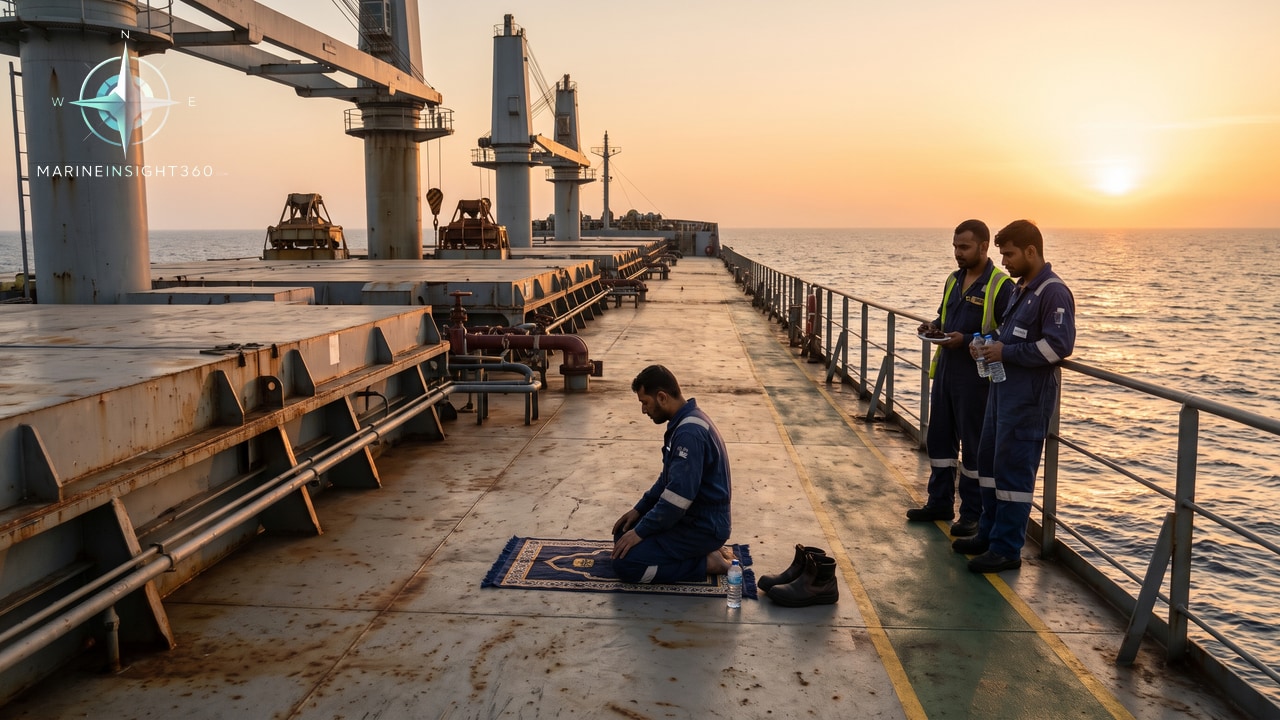
Ramadan at Sea: Fasting, Prayer and Watchkeeping for Muslim Seafarers
A practical guide to Ramadan on board: fasting and watchkeeping, rest hours, suhoor and iftar timings across time zones, galley, prayer and Eid.

Ship Earthing Systems: Insulated Networks, Bonding and Earth-Fault Monitoring
Why ships use insulated electrical systems, how earth faults are found, high-voltage resistance earthing, bonding, tanker rules and shore power.