
What Are The Duties Of A Ship’s Lookout?
The officer on duty assigned watch and navigation duties on the bridge of a ship is called the officer on watch (OOW). While guarding the bridge, he is the captain's agent.
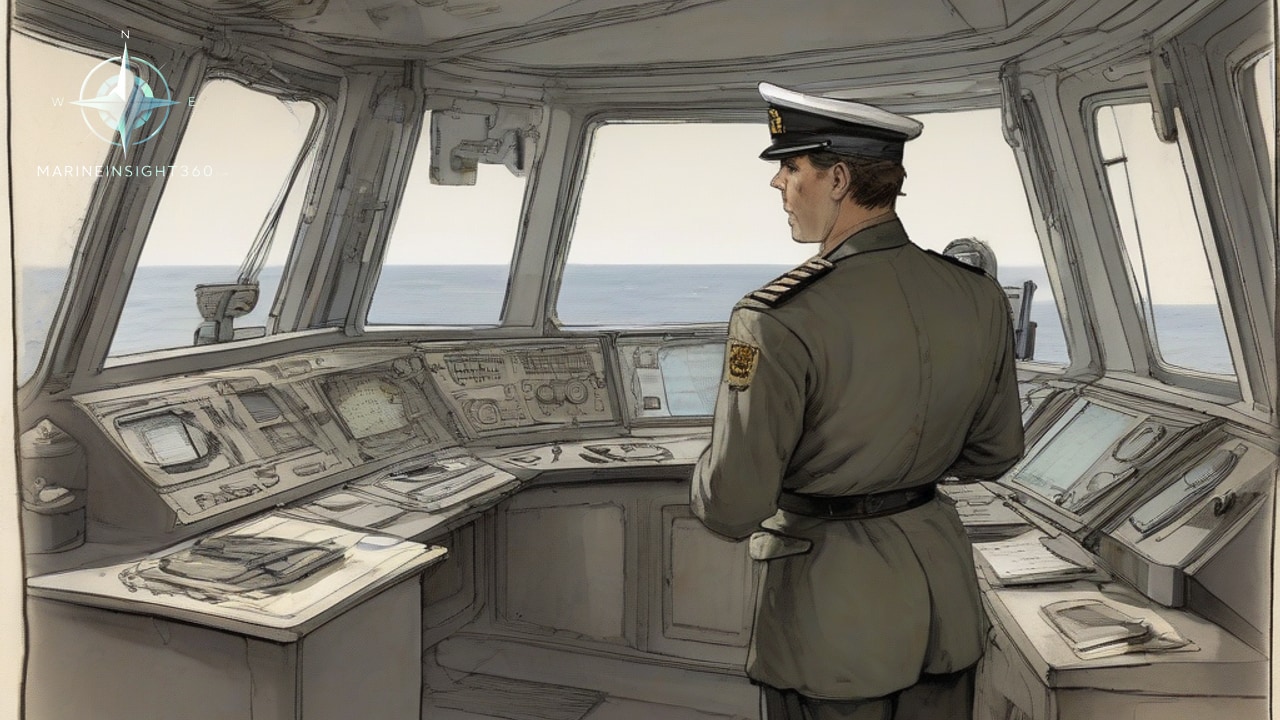
The officer assigned to keep the navigational watch on a ship's bridge is called the officer of the watch (OOW). While on watch, the OOW is the Master's representative and is responsible for the safe navigation of the ship. The OOW is also in charge of the bridge team supporting the watch, such as the lookout and helmsman, and must make sure the ship complies with the COLREGs and that the Master's standing orders and instructions are followed safely at all times. The OOW's job on the bridge is a separate discipline from the engineers' watch below, covered in our guide to marine engineering. Broadly, the OOW's duties fall into three groups:
- Navigation
- Watch
- GMDSS Radio
Deck officers learn these duties on their nautical course and then on board. The list below covers the main ones, but it isn't complete, and the tasks vary with the ship and the company's requirements.
Compare the Compasses
Compare the gyro and magnetic compasses regularly so you always know the compass errors and can allow for them. If the gyro fails, the OOW needs to know how much the magnetic compass error affects the course being steered. Comparing the repeaters with the master gyro also shows whether each repeater is aligned and reading correctly, which matters when taking bearings from the bridge wings or working out the compass error by azimuth.
Check the Acoustics of the Depth Sounder
Under-keel clearance (UKC) and water depth are critical to safe navigation at all times. Depths are recorded as required by the Master's instructions, but the OOW must also know the echo sounder's errors and settings, such as whether it reads depth below the keel or below the surface, so the readings can be trusted. This matters most in shallow water, where not knowing the true depth can put the ship aground.
Make Sure the Lookout is Alert
The lookout and the helmsman both need to stay alert at all times. Rule 5 of the COLREGs requires that "every vessel shall at all times maintain a proper look-out by sight and hearing as well as by all available means appropriate in the prevailing circumstances and conditions so as to make a full appraisal of the situation and of the risk of collision." Keeping a proper lookout is a basic skill of the deck officer, not of marine engineering, and it matters most in restricted visibility (COLREGs Rule 19), when the lookout's role is at its most important.
Verify Location
The relieving OOW should check the ship's position independently rather than just accepting the last position on the chart or ECDIS. This isn't a question of doubting the outgoing OOW; it is a cross-check for your own confidence and to catch any error before it carries forward, since every future position is worked from the current one.
Discussing with the Outgoing
Navigation is constantly changing, and what has happened in the last few hours often shows how the situation around the ship is developing. The outgoing OOW should tell the relief about anything unusual, any changes to the course to steer, anything that needs to be reported to the Master, weather warnings and reports, and any VHF communications with other ships.
The relieving OOW should also ask whether the Master or chief officer left any verbal instructions, and clear up anything in the night orders that is unclear.
Reading Log Entries
The relieving OOW must read the outgoing OOW's log entries before the outgoing officer leaves the bridge, and ask about anything that isn't clear. Once the watch has been handed over, responsibility for it rests with the new OOW, so the checks are worth doing carefully.
Draft
The ship's current draft should be displayed on the bridge so the OOW can check it easily, and it should be updated whenever it changes.
Gyro and Its Errors
Every instrument on the bridge can have errors, but the gyro matters most, because it is used all the time to plan, steer and monitor courses and alterations. Different gyros need different inputs: many need the ship's speed and latitude entered or fed in automatically to correct their errors. The OOW must check that these inputs are right and allow for any remaining error, following the Master's instructions.
GMDSS
The OOW keeps the GMDSS radio watch on the frequencies required by the regulations, such as VHF DSC channel 70 and channel 16. Maritime safety information (MSI) received by NAVTEX, Sat C EGC or VHF must also be checked. Not every message affects the ship, but the OOW must receive, read and understand each one and decide whether it does.
General Ship Walk
On many ships, the officer going on watch, or the one just relieved, makes a round of the ship to check that fire safety is in order, that there are no signs of fire or unauthorised entry, that nothing is out of place, that loose items are secured and that the accommodation is in order. When the round is finished, the officer reports to the OOW that it has been completed and whether anything was found.
Additionally
The OOW must also:
- Check the navigation equipment in use regularly.
- Navigate in accordance with the COLREGs to avoid collision.
- Know how to use the Automatic Radar Plotting Aid (ARPA).
- Know how to use the Electronic Chart Display and Information System (ECDIS).
- Know the ship's speeds, turning circles and other manoeuvring characteristics.
- Prepare, implement and monitor a safe passage plan.
- Hand over the watch in line with the company's safety management system (ISM) procedures.
- Ask for help if necessary.
- Call the Master if necessary.
- Know all the safety equipment on board.
- Know how to use the bridge controls and signalling equipment, and the equipment used to prevent marine pollution and protect life.
- Never leave the bridge unattended during the watch.
This is only a general outline of the OOW's duties on the bridge, which are as distinct from marine engineering as the bridge is from the engine room. It can't cover every duty, because a lot depends on the type of ship. On tankers, for example, the OOW also monitors the inert gas system readings. The OOW needs a full understanding of the ship type and everything the watch involves, and since the situation at sea keeps changing, so do the OOW's tasks.
Recommended Reading
Shipping Agent Role: Port Call Duties Explained
Learn how a shipping agent coordinates vessel clearance, port services, documents and communications before, during and after a port call.
Duties of a Maritime Insurance Broker
Maritime trade involves high-value assets, long voyages, and constant exposure to risk. From ships and cargo to crew and ports, a single incident can lead to massive financial loss.

Duties of a Marine Engineer in the Merchant Navy
A marine engineer is the backbone of any merchant ship.