
Top 10 Maritime Crimes in the World
International shipping and maritime travel rely on the safety of the high seas and a network of ports and terminals. However, maritime crime has become a…
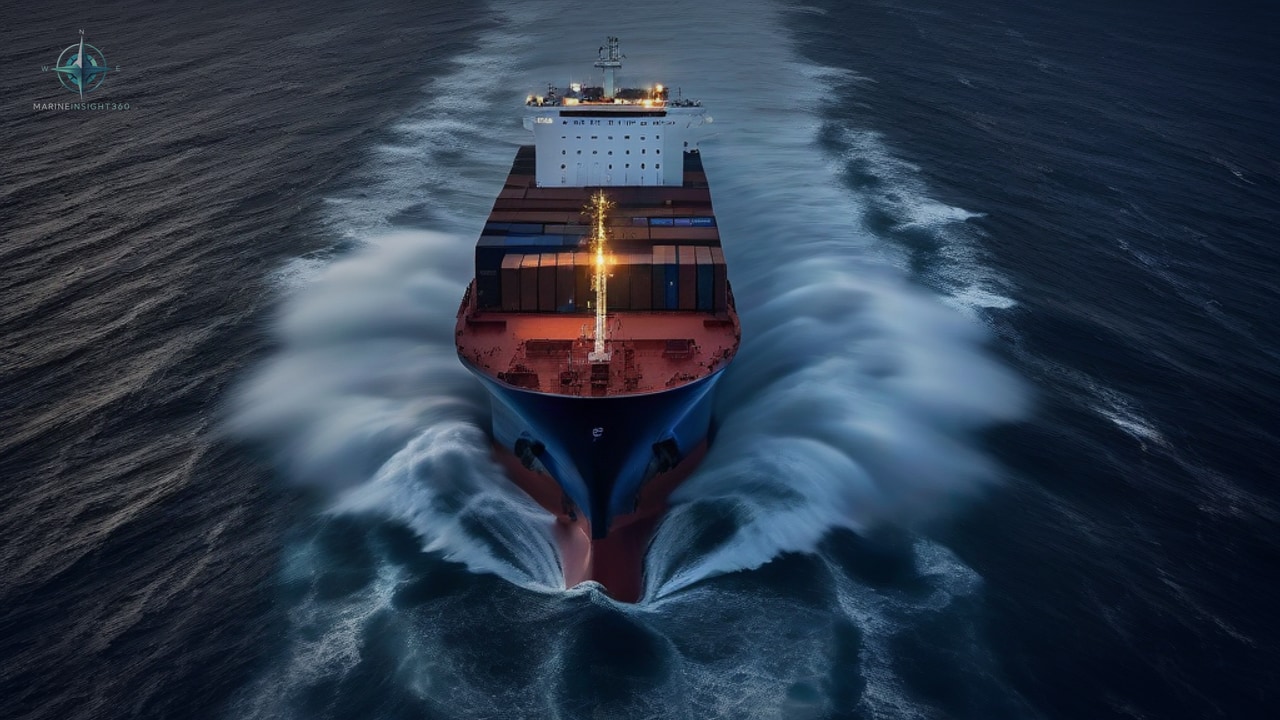
Maritime crimes are criminal acts committed at sea or in maritime waters, and the main types are piracy and armed robbery, drug trafficking, human trafficking, illegal fishing, smuggling, ocean dumping and maritime terrorism.
International shipping and maritime travel depend on safe seas and a network of ports and terminals. Maritime crime threatens ships and seafarers and adds cost to the whole transport chain.
Crime at sea is as old as shipping, and its results have always been loss of life and property. No single country has jurisdiction over the high seas, so fighting maritime crimes such as piracy depends on countries working together, especially against organised groups that hijack ships and hold crews for ransom.
Piracy is only one type of maritime crime, and this article covers ten. First, a definition of maritime crime.
What is Maritime Crime?
Maritime crime covers criminal acts committed at sea or in maritime zones, including international waters, territorial seas, archipelagic waters and exclusive economic zones.
It includes piracy, armed robbery at sea, illegal and unreported fishing, ocean dumping, trafficking of people, drugs and weapons, smuggling and maritime terrorism, among others.
The line between sea and land is blurred, because many maritime crimes start at sea and finish ashore. Illegally caught fish are sold in ordinary markets, and people trafficked by sea end up in forced labour on land.
What are the consequences of maritime crime?
The consequences are serious, and they are made worse by the lack of a single court with jurisdiction and by complicated legal procedures. Freeing a hijacked ship or kidnapped seafarers can take months.
Maritime crime threatens countries that rely on the sea for food and income, and some of it, such as drug smuggling and human trafficking, has effects far from where the ship sailed.
It hits developing countries hardest and can weaken their economies and governments. Analysing and studying hotspots such as the waters off Somalia helps governments tackle the causes on land, not only the attacks at sea.
List of Different Types of Maritime Crime
1. Piracy, Hijacking, Kidnapping, and Armed Robbery
Under international law, piracy is an attack on a ship on the high seas for private ends; the same attack inside a country's territorial waters is armed robbery at sea. Ships are most often attacked at anchor, in narrow waterways or when steaming slowly.
Piracy and armed robbery can mean violence against seafarers and sometimes loss of life. Crew members held hostage suffer psychological trauma as well as physical harm.
Robbers board ships to steal stores, equipment and cash, while organised pirate groups hijack ships and hold the cargo and crew for ransom. Attacks in the Gulf of Guinea peaked around 2020, and Somali piracy returned in late 2023, when naval forces in the region were busy with Houthi attacks on shipping in the Red Sea.
The main areas of risk are Southeast Asia, including the Singapore Strait, the Strait of Malacca, the Sulu and Celebes Seas and the Indonesian archipelago, along with the Horn of Africa and Somali coast, the Gulf of Guinea and parts of the Caribbean and South America.
Between January and September 2024, the International Maritime Bureau Piracy Reporting Centre received reports of 79 incidents of piracy and armed robbery, the lowest for that period since 1994. Sixty-two vessels were boarded, six were hijacked, nine faced attempted attacks and two were fired upon. In all, 111 crew members were taken hostage, 11 were kidnapped and three were threatened.
Poverty and weak government ashore are widely seen as the root causes of piracy, especially in Africa, and lasting solutions have to deal with them.
2. Drug Trafficking
Drug trafficking is one of the most widespread maritime crimes. Organised criminal groups use merchant ships, fishing boats, yachts and semi-submersibles to move drugs across the world, and the illegal drug trade as a whole is worth hundreds of billions of dollars a year.
Cocaine, cannabis, heroin and other opiates make up most of the seaborne trade. Drug routes where fishing vessels are known to be involved include the Caribbean, the Atlantic and the Indian Ocean, and seaborne drugs end up in countries from the Maldives and Sri Lanka to China, Europe and the Americas. Much of the cocaine reaching Europe arrives hidden in containers.
3. Human trafficking
Human trafficking exploits men, women and children, mainly for forced labour and sexual exploitation. People living in poverty, and those fleeing civil war or political unrest, are the most likely targets. At sea it also includes forced labour on fishing vessels.
The UN Office on Drugs and Crime (UNODC) publishes the main global report on trafficking in persons, based on data from national authorities. The IOM's Counter Trafficking Data Collaborative also publishes victim data gathered from anti-trafficking organisations.
UNODC reported that the number of detected victims fell in 2020 for the first time in twenty years, as COVID-19 restrictions limited movement. Detected victims of sexual exploitation fell by 24 percent, partly because the public places where it usually happens were closed. Some of this activity is believed to have moved to hidden locations, where it is harder to detect.
4. Illegal, unreported, and unregulated (IUU) fishing
Illegal, unreported and unregulated fishing is fishing without a licence, or in breach of national and international fishing rules, or without reporting the catch. It happens both on the high seas and in waters under national jurisdiction, and it drives overfishing, damages marine ecosystems and threatens food security.
The Food and Agriculture Organization of the United Nations (FAO) estimates that IUU fishing takes up to 26 million tonnes of fish a year, worth up to $23 billion, a significant share of the world's total catch. It undermines fish stocks and the livelihoods of coastal fishing communities.
5. Unauthorized access
Under the UN Convention on the Law of the Sea, foreign ships have the right of innocent passage through a country's territorial sea, but they must not stop, fish, smuggle or carry out other prohibited activity there, and entering ports and internal waters needs the coastal state's permission. Entering restricted zones, fishing illegally or landing people or goods without clearance is an offence. Criminal groups use the same coastal waters to approach and attack vulnerable ships, at anchor or underway.
6. Marine pollution
Deliberate Marine pollution means ships dumping oil, waste or other pollutants into the sea. It damages the environment, causes economic losses and can harm human health.
It takes many forms, including oil pollution, plastic and solid waste, toxic waste, untreated ballast water that carries invasive species into new environments, and sewage.
The main international rules on marine pollution include MARPOL, the London Convention on dumping, the Basel Convention on hazardous waste and the United Nations Convention on the Law of the Sea.
7. Arms smuggling
Arms smuggling by sea is the illegal transport of firearms, explosives and ammunition on commercial and private vessels. It threatens peace and security, especially in regions with civil war, terrorism or political unrest.
Known smuggling hotspots include the Horn of Africa and the Gulf of Aden, South and Southeast Asia, the Eastern Mediterranean, North Africa, the Caribbean and Central America.
International measures against it include the UN Arms Trade Treaty and arms embargoes imposed by UN Security Council resolutions.
8. Illegal salvage operations
Illegal salvage means recovering wrecks, cargo or valuable materials from the sea without the legal right to do so or without the authorities' approval. It can break environmental, maritime safety and property laws, and on historic wrecks it can destroy archaeological sites and war graves.
Lawful salvage of a wreck needs the agreement of its owner or insurers and, in coastal waters, the permission of the coastal state. Illegal operators ignore those rights, often working from unlicensed vessels with unsafe methods, and some have stripped whole wartime wrecks for scrap metal.
9. Tax evasion
Some shipowners and traders evade taxes and duties by submitting forged documents or false cargo declarations, a form of customs fraud that also undermines maritime security, because false paperwork hides what is really in the box.
10. Stowaways/Hackers
A stowaway is a person who boards a ship without the consent of the master or the owner and hides on board to reach another country. Stowaways break immigration laws, but unlike trafficking victims they are not usually being exploited by someone else.
They are a safety and security problem, because they hide in dangerous places such as cargo holds, rudder trunks, on top of containers or in other unused spaces, and some die on the voyage. Most are escaping war, conflict, political unrest or poverty at home in search of a better life. Hackers are the newer threat: criminals have broken into port and shipping IT systems to locate containers carrying drugs, as happened at the Port of Antwerp between 2011 and 2013.
Ways to improve maritime security
All of these crimes threaten maritime security. Despite the ISPS Code and naval patrols, maritime security remains at risk, largely because countries still lack joined-up systems and cooperation. Ways to fight maritime crime include:
- Better surveillance and international cooperation
- Satellite tracking of ships
- Stronger regulations and enforcement
- More effective security checks on ships and in ports
- Efficient customs and inspection services
- Countries identifying the weaknesses in their own security systems and fixing them
Recommended Reading
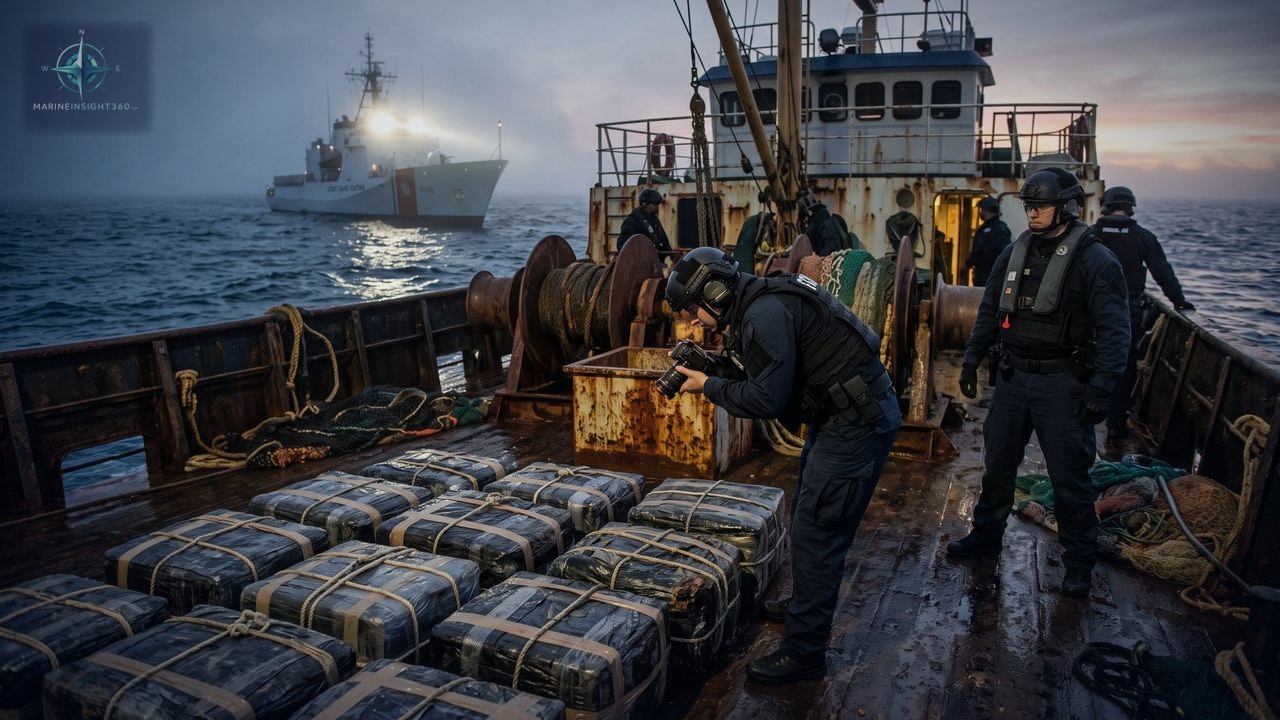
10 Types of Maritime Crimes
The world’s oceans carry more than 80% of global trade, making maritime routes vital to the global economy. However, these waters are not free from crime.
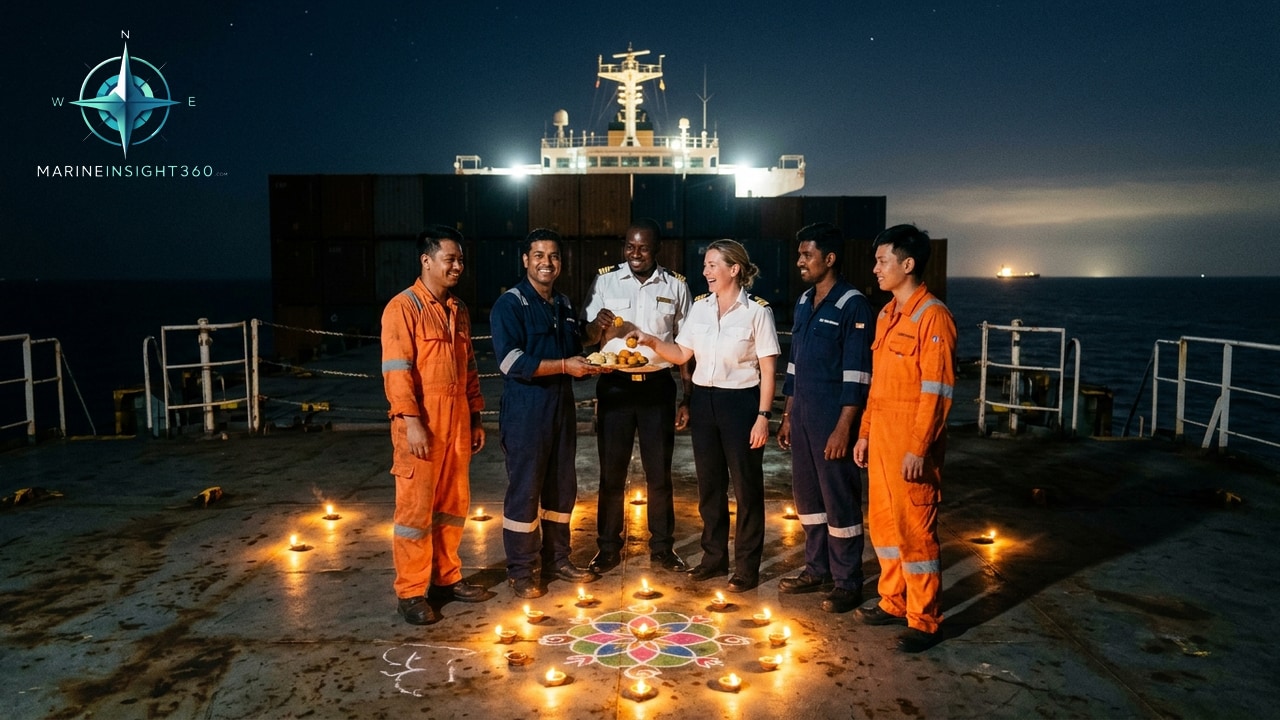
Diwali at Sea: Far from Home, Together as One Crew
What Diwali looks like on a merchant ship: a crew of different faiths and nationalities celebrating together, thousands of miles from home.
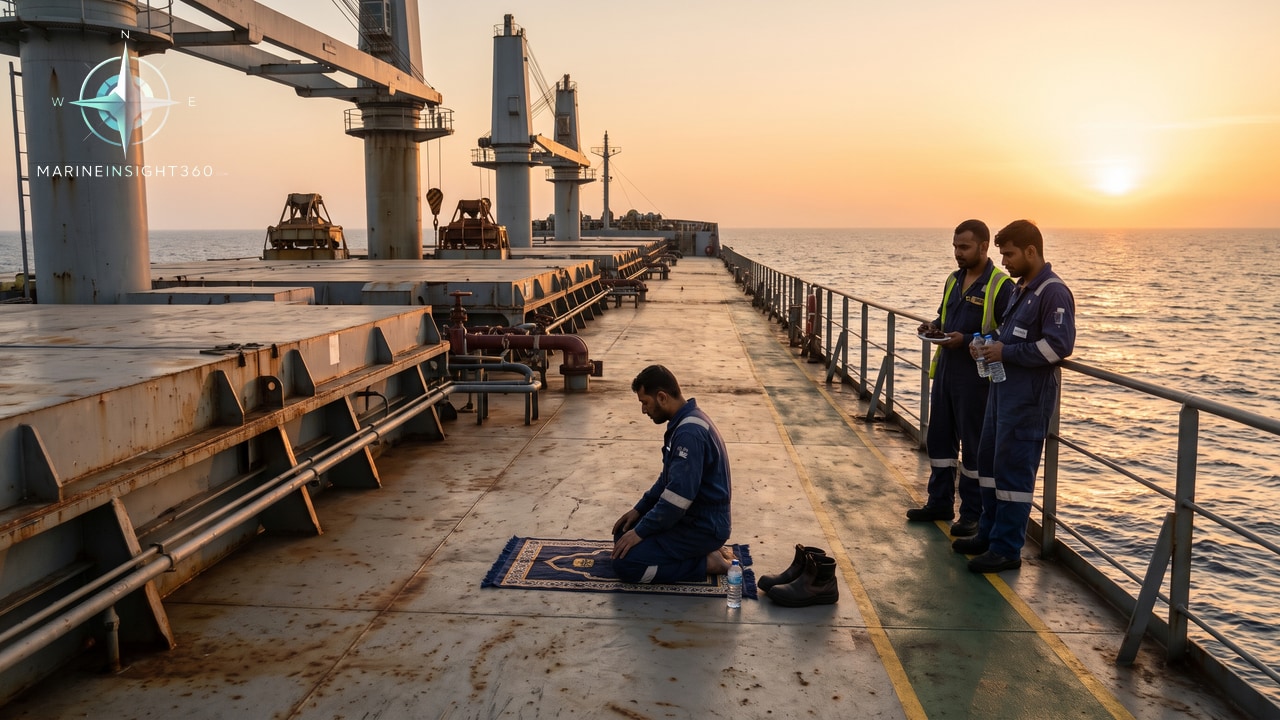
Ramadan at Sea: Fasting, Prayer and Watchkeeping for Muslim Seafarers
A practical guide to Ramadan on board: fasting and watchkeeping, rest hours, suhoor and iftar timings across time zones, galley, prayer and Eid.