
Top 10 Maritime Navies in the World
The Navy plays a vital role in global maritime security. It protects trade routes, fights piracy and smuggling, etc., and demonstrates its power. The…
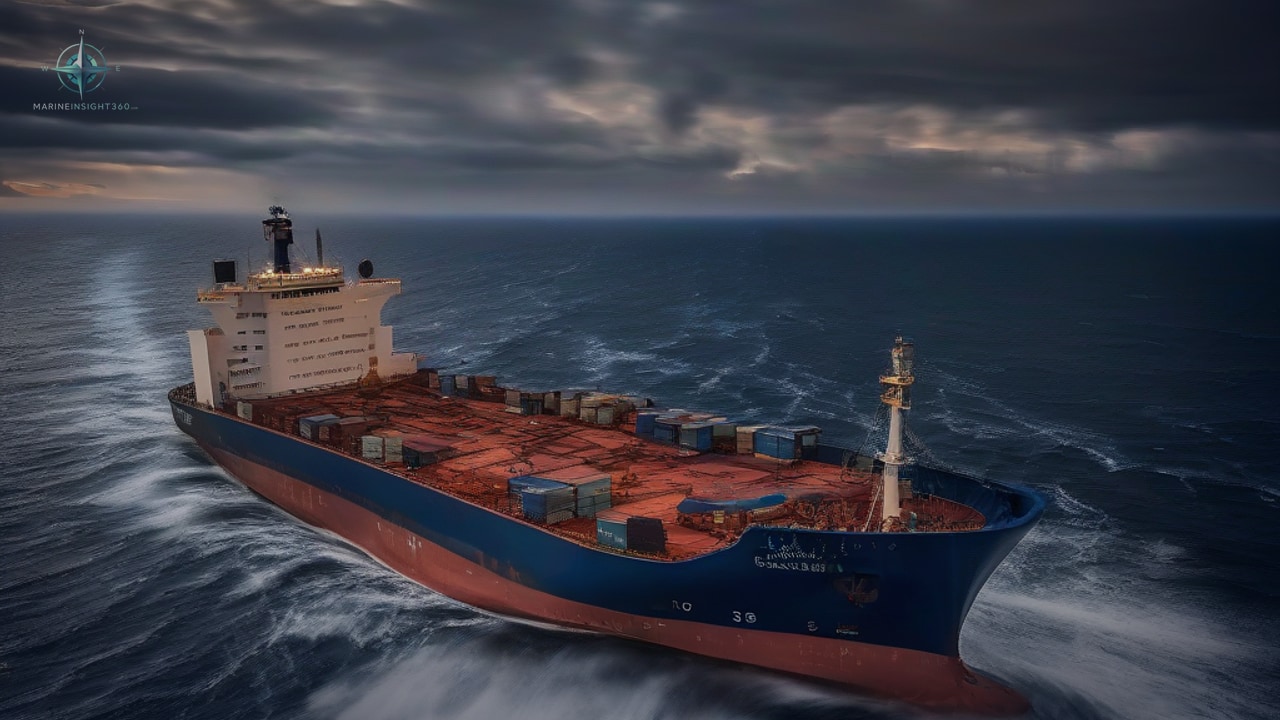
List of Top 10 Maritime Navies in the World
Navies are central to global maritime security. They protect trade routes, fight piracy and smuggling, and show a country's power at sea. The largest navies operate modern warships with advanced weapons and sensors, which gives them real weight in global politics.
This article ranks the world's top 10 navies using the World Directory of Modern Military Warships (WDMMW) ranking. Its formula looks at more than the number of ships: it also weighs how modern the fleet is, logistical support, offensive and defensive capability, domestic shipbuilding, and other factors. By these criteria, the most powerful navy is the United States Navy.
Here are the other countries on the list of the world's largest navies.
1. United States Navy
The United States Navy has an active fleet of 232 ships counted in the ranking. It has the world's largest fleet of aircraft carriers, led by the USS Gerald R. Ford, one of the most advanced warships afloat. Its surface force is built mainly around destroyers, including 74 Arleigh Burke-class destroyers in service with another 19 planned. It also has two Zumwalt-class destroyers in service and a third being completed. Destroyers make up about a third of the fleet. The Navy also operates littoral combat ships and amphibious assault ships. Its submarine force is the world's most capable nuclear submarine fleet, with 53 fast attack submarines, 14 ballistic missile submarines, and 4 guided missile submarines.
2. People's Liberation Army Navy
China has 405 active ships, so by number of ships the Chinese Navy is the largest in the world. Its fleet is less modern than the American fleet, but the PLA Navy is growing quickly in both numbers and technology, with new surface combatants, submarines and support ships.
China has three aircraft carriers: Liaoning, Shandong, and Fujian, which was commissioned in November 2025. It has more than 70 submarines, some of them obsolete. Its destroyers and frigates are mostly new. The navy also has about 70 light frigates (corvettes) and 8 minesweepers. The amphibious force is large and growing, with at least 24 ships on order.
The 127 offshore patrol ships make up about 31% of the force, followed by submarines at 18%, and destroyers, frigates and light frigates at about 12% each.
3. Russian Navy
The Russian Navy has 283 active ships. Its 83 corvettes are the largest group, about 29% of the fleet and the bulk of its surface combat force, and their number is still growing. Submarines (58) make up about 21%, offshore patrol ships (50) about 18%, and mine warfare ships (48) about 17%. The rest are cruisers, including the Kirov-class battlecruiser, destroyers, frigates and amphibious ships.
Many of the submarines and larger surface ships are old, while the frigate and corvette fleets have added new ships.
Russia has only one aircraft carrier, the Admiral Kuznetsov, commissioned in 1990. It has not deployed since 2017, work on its refit was suspended in 2025, and the head of Russia's state shipbuilding corporation has said it is likely to be sold or scrapped.
4. Indonesian Navy
The Indonesian Navy is the largest navy in Southeast Asia, with 245 active ships. Its strength is growing as it buys modern weapons and replaces old ships. Indonesia licensed the British Arrowhead 140 frigate design from Babcock in 2021, and the state shipyard PT PAL is building the frigates in Surabaya, East Java.
It has also bought two Pattugliatore Polivalente d'Altura (PPA) class offshore patrol vessels from Italy and launched two domestically built patrol vessels. Indonesia has also ordered or discussed ships and submarines from Turkey and France. It is buying ships armed with anti-ship and anti-aircraft missiles to strengthen deterrence as China's presence grows near the South China Sea.
The Indonesian Navy has four submarines, about 2% of its force; 7 frigates and 25 light frigates, about 13%; 168 offshore patrol ships, about 69%; and 32 amphibious ships.
5. South Korean Navy
The South Korean Navy has about 70,000 personnel including marines, about 147 ships, and a modern submarine fleet that includes the KSS-III class. It is one of the strongest navies in the region, and South Korea has studied building a light aircraft carrier.
The force is built for defence and deterrence against North Korea, and patrol vessels make up about half of it. South Korea is allied with the United States.
It has 21 submarines, about 14% of its force; 13 destroyers, about 9%; 17 frigates, about 12%; 14 mine warfare vessels; and 69 offshore patrol ships. It also has 10 amphibious ships.
6. Japan Maritime Self-Defense Force
Japan's navy is one of the largest in Asia by fleet tonnage. Its 105 active ships are technologically advanced, with a strong focus on anti-submarine warfare, backed by a large shipbuilding industry and well-trained crews.
It has no conventional aircraft carriers, but its two Izumo-class helicopter destroyers are being converted to operate F-35B fighters. Its main strength lies in destroyers and submarines with advanced weapons and sensors. The fleet consists of 24 submarines, 42 destroyers, 6 frigates, 22 mine warfare vessels, 6 offshore patrol ships, and 3 amphibious ships.
7. Indian Navy
India's position in the middle of the Indian Ocean lets its navy watch over important sea lanes and extend its regional influence. The Indian Navy has about 150 ships and submarines and 300 aircraft, with 67,252 active personnel and 75,000 reserves.
It operates modern warships, aircraft carriers, submarines, and a large naval air arm. China's growing navy is also increasing its presence in the Indian Ocean, which India watches closely. India's two aircraft carriers, INS Vikramaditya and INS Vikrant, let it deploy fighter jets at sea. Its fleet includes two aircraft carriers, 19 submarines, 13 destroyers, 14 frigates, 18 corvettes, 29 offshore patrol ships, and 5 amphibious ships.
8. French Navy
The French Navy is one of the strongest in the world, with the nuclear-powered aircraft carrier Charles de Gaulle and a large fleet of surface ships and submarines. Its fleet includes 10 submarines, among them four ballistic missile submarines, 21 destroyers and frigates, 17 mine warfare vessels, 20 offshore patrol ships, and 3 amphibious assault ships.
France's ballistic missile submarines carry its nuclear deterrent. The French Navy is also developing maritime unmanned systems, including unmanned surface vessels (USVs).
9. British Navy
The Royal Navy has a long history of naval dominance. Its ships and submarines use advanced technology, and it puts heavy effort into research and development.
The Royal Navy can still deploy to several regions at once, drawing on Britain's long shipbuilding history.
The Queen Elizabeth-class aircraft carriers are the largest warships ever built for the Royal Navy. They carry the F-35B Lightning II as their main strike aircraft and can carry up to 72 aircraft.
The British Navy has 50 active ships, including 2 aircraft carriers, 9 submarines, 6 destroyers, 8 frigates, 7 mine warfare vessels and 18 offshore patrol vessels.
10. Turkish Navy
Turkey has invested heavily in modernising its fleet with domestically built warships, such as the Ada-class corvettes. Work on its first aircraft carrier, the MUGEM, began at Istanbul Naval Shipyard in January 2025, with delivery planned for 2032. Turkey is also developing its own naval weapons and systems to reduce its dependence on foreign suppliers.
The Turkish fleet has 90 active ships, including 1 amphibious assault ship, 13 submarines, 17 frigates, 9 corvettes, 11 mine warfare vessels, 34 offshore patrol ships and 5 amphibious ships. TCG Anadolu is the largest ship in the Turkish Navy. It is an amphibious assault ship with a full flight deck for helicopters and drones, which extends Turkey's reach in the Black Sea and the Eastern Mediterranean.
Recommended Reading
Diwali at Sea: Far from Home, Together as One Crew
What Diwali looks like on a merchant ship: a crew of different faiths and nationalities celebrating together, thousands of miles from home.
Ramadan at Sea: Fasting, Prayer and Watchkeeping for Muslim Seafarers
A practical guide to Ramadan on board: fasting and watchkeeping, rest hours, suhoor and iftar timings across time zones, galley, prayer and Eid.
Ship Earthing Systems: Insulated Networks, Bonding and Earth-Fault Monitoring
Why ships use insulated electrical systems, how earth faults are found, high-voltage resistance earthing, bonding, tanker rules and shore power.