
What Is the Beam of a Ship? Breadth Explained
A ship's beam is its breadth, the widest point of the hull. How it is measured, moulded versus extreme breadth, beam on multihulls, and why it matters in design.
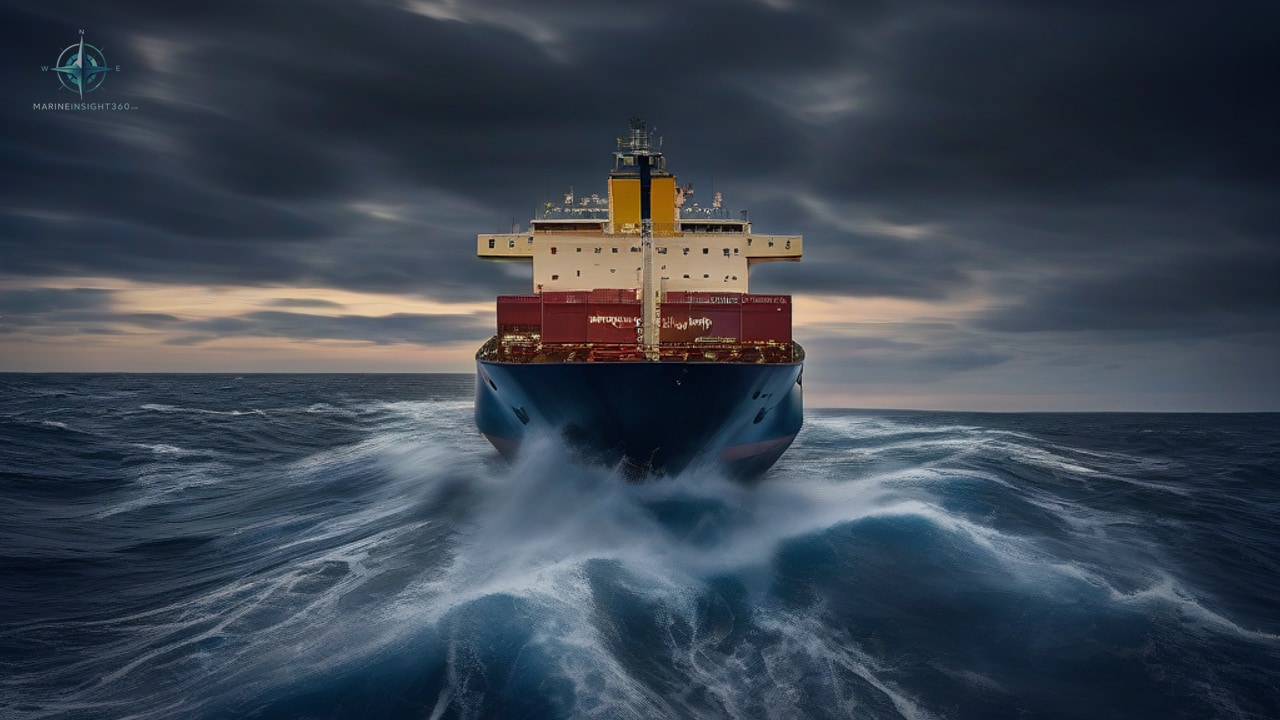
A ship's beam is its breadth: the greatest width of the hull, measured between the outermost points of its cross-section. On most ships that widest point is near amidships.
In shipbuilding, "beams" can also mean the transverse structural members that run across the ship and support the deck. This guide is about beam as a measurement.
Beam among a ship's main dimensions
Four dimensions describe a ship's size: length, breadth, depth and draught. The words are familiar, but each has precise maritime definitions.
Length is measured in several ways. Length overall (LOA) runs from the foremost to the aftmost point of the hull. Length between perpendiculars (LBP) is measured between the forward and aft perpendiculars, and waterline length (LWL) is the length of the hull at the waterline. The three figures are different, and each is used for a different purpose.
Draught is the vertical distance from the ship's baseline to the waterline. A ship has different permitted draughts for different conditions, such as summer, winter and fresh water, which is why ocean-going ships carry load line marks, also called Plimsoll marks, on the side of the hull. Depth is the vertical distance from the baseline or the bottom of the keel plate up to the main deck, also called the strength deck.
How breadth is measured
Breadth is the width of the hull measured across the ship, at right angles to its length. Anyone looking at a ship can see which dimension is length and which is breadth, but the value used in design is a specific one: the maximum breadth.
The breadth of most ships changes along their length. It is smallest at the bow and stern and largest around the middle of the ship, where many hulls have a parallel middle body with a constant cross-section. On some ships the widest point is not near amidships, and the maximum breadth is measured wherever it occurs.
In practice the maximum breadth is the horizontal distance between the outermost points of the hull's cross-section, usually taken at the main deck near the middle of the ship. Older ships built with tumblehome were narrower at deck level than lower down, so their maximum breadth was measured below the deck, between the widest points of the side plating.
Breadth at the waterline (BWL) is measured in the same way as waterline length: it is the widest point of the hull at a given waterline. BWL can be less than the maximum breadth, but on a barge, whose hull shape is close to uniform in both directions, the two are about the same.
Moulded and extreme breadth
Breadth and depth are each given in two forms. Moulded breadth is measured to the inside of the shell plating and ignores its thickness. Extreme breadth is measured to the outside, so it includes the plating and anything that projects from the hull. Most design work uses the moulded dimension, while extreme breadth matters when a ship has to fit a lock, a dry dock or a berth.
Beam on multihulls
Catamarans and trimarans also use beam on centerline (BOC). For a catamaran, BOC is the transverse distance between the centerlines of the two hulls, measured at the level of the main deck. For a trimaran it is the distance between the centerlines of the two outer hulls.
Breadth is not girth
Breadth is often confused with girth. Breadth is a straight-line distance from one side of the hull to the other. Girth is the distance measured around the outside of a cross-section, following the curve of the hull from one deck edge to the other. If you laid a string along the hull's outline at one section and then pulled it straight, its length would be the girth at that section.
A necklace works the same way: its width when worn is its breadth, and its length when laid flat on a table is its girth.
Why beam matters in design
Designers use the length-to-beam ratio (L/B) to describe hull shapes. Slender, fast ships such as passenger ferries, frigates and corvettes have a high L/B ratio. Full-bodied ships such as tankers and bulk carriers have a lower ratio and are usually slower. Container ships fall between the two, because they need both speed and enough hull volume for cargo.
Beam also affects stability. A wider hull has a larger waterplane, which gives the ship more initial stability, and it provides more deck area and more internal tank space. The trade-off is access: the wider a ship is, the fewer canals and locks it can use.
Recommended Reading

Diwali at Sea: Far from Home, Together as One Crew
What Diwali looks like on a merchant ship: a crew of different faiths and nationalities celebrating together, thousands of miles from home.
Ramadan at Sea: Fasting, Prayer and Watchkeeping for Muslim Seafarers
A practical guide to Ramadan on board: fasting and watchkeeping, rest hours, suhoor and iftar timings across time zones, galley, prayer and Eid.
Ship Earthing Systems: Insulated Networks, Bonding and Earth-Fault Monitoring
Why ships use insulated electrical systems, how earth faults are found, high-voltage resistance earthing, bonding, tanker rules and shore power.