
What is the FSRU Regas Unit?
A Floating Storage Regasification Unit (FSRU) is an essential component of the oil industry. The FSRU is needed to transit. Also, it transfers Liquefied Natural Gas (LNG) through oceanic channels.
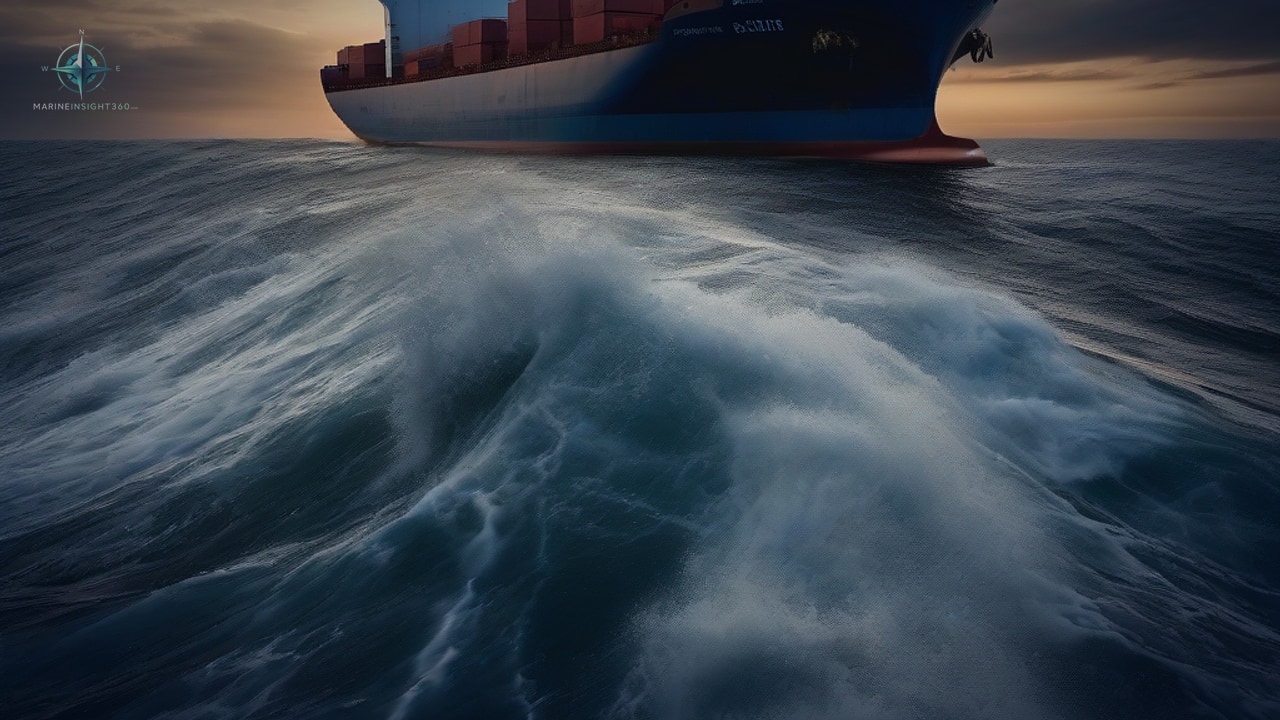
A Floating Storage Regasification Unit (FSRU) is a ship, or ship-shaped floating unit, that receives liquefied natural gas (LNG) from LNG carriers, stores it, turns it back into gas and sends the gas ashore by pipeline. It does the job of an onshore LNG import terminal, and it is part of the gas industry's supply chain rather than the oil industry's.
LNG is a cleaner fuel than oil or coal, but handling it is demanding. It is carried as a cryogenic liquid, and a mistake can put lives at risk, waste cargo and harm the environment.
Natural gas is liquefied at the export terminal by cooling it to about -162 °C, which shrinks its volume about 600 times so that it can be shipped economically. At the receiving end it has to be warmed back into gas before it can go into the pipeline network. Building an onshore import terminal with storage tanks and a regasification plant is expensive and takes years.
An FSRU puts the storage tanks and the regasification plant on a floating unit that can be moored in a harbour or offshore, which is usually cheaper and much quicker to bring into service.
Classification of FSRU Vessels
Depending on their design and use, FSRUs are classed either as ships or as offshore installations. They are provided in two main ways:
As a purpose-built FSRU, constructed with regasification equipment on board from the start, much like an LNG carrier with extra plant.
As a conversion of an existing LNG carrier, often an older ship, which is fitted with regasification equipment and moored at a chosen site as an offshore installation.
An FSRU that keeps its propulsion is built much like any other LNG carrier. It can trade as a normal carrier in the LNG trade when it is not needed as a terminal, goes through regular dry docking, and must comply with the international safety standards for gas carriers. Its main advantage is flexibility: it can store and regasify its own cargo or cargo transferred to it, and it can be moved to another site when demand changes.
A converted LNG carrier can keep its propulsion and stay mobile, or have it removed and become a permanently moored unit. A mobile unit can be used as an FSRU or go back to trading as an LNG carrier when required.
A permanently moored unit works like a fixed terminal. It stays connected to the shore pipeline and is kept supplied by LNG carriers discharging alongside.
Because the FSRU also provides storage, regular deliveries from LNG carriers keep the tanks topped up so that the gas supply to shore does not run out between cargoes.
Key Equipment of FSRU
Tanks
The "S" in FSRU stands for storage. The LNG is kept in membrane tanks or spherical Moss-type tanks. Membrane tanks use the hull volume more efficiently, so they give more storage capacity for a ship of the same size, and most modern FSRUs have them.
Regasification Unit
The "R" stands for regasification. The regasification plant pumps the LNG, carried at −162 °C (−260 °F), up to pipeline pressure and warms it in vaporisers until it becomes natural gas at close to ambient temperature.
LNG Unloading Arms known as Hoses
The LNG carrier delivering a cargo transfers it to the FSRU either through loading arms fitted on the FSRU or through cryogenic hoses, usually in a ship-to-ship transfer alongside.
Advantages of hoses over arms:
- Easy to install and store
- Take up less space and cost less than loading arms
Advantages of arms over hoses:
- Higher transfer rates
- Ease of operation
- Often preferred at jetty-moored units with high throughput
Heating Medium for FSRU
Seawater is the usual heat source for vaporising LNG. When seawater passes directly through the vaporisers, or through an intermediate heat exchanger, and is discharged overboard, the system is called open loop. The cold seawater discharged after heat exchange with the LNG has to meet environmental limits on temperature drop and on any chemicals used to prevent fouling.
The alternative is a closed-loop system, in which a fresh water and glycol mixture is circulated through the vaporisers and reheated by steam from the ship's boilers. It avoids the seawater discharge but burns fuel.
Another option is intermediate fluid vaporisation (IFV), which works in two stages. In the first, propane is the intermediate fluid: it is warmed by seawater, evaporates, and then condenses on the cold LNG tubes, vaporising the LNG. In the second stage, the cold natural gas is warmed further by seawater. Systems can combine open and closed-loop operation.
Boil-Off Gas (BOG) Management
LNG always gives off some boil-off gas because heat leaks into the tanks, and more is generated during loading as the incoming cargo displaces vapour, just as when filling onshore tanks. Part of the vapour is returned to the delivering LNG carrier to fill the space left by the cargo it has discharged. The rest must be dealt with to stop the tank pressure rising. On an FSRU it is usually recondensed into the LNG being sent out, used as fuel in the boilers or engines, or reliquefied and returned to the tanks through the loading or spray lines, under the ship's boil-off gas management system.
Gas Export Arms or Hoses
Most FSRUs moored at a jetty send the gas ashore through high-pressure gas export arms. Some use high-pressure flexible hoses instead, and offshore units often send the gas through a submerged turret or riser to a subsea pipeline.
The number of FSRUs has grown quickly, mainly because they cost less and can be in service much sooner than an onshore terminal, and because they can be chartered instead of bought. They can also be moved to another site if demand changes, which a land-based terminal cannot do, and they have let many new countries start importing LNG.
Recommended Reading
Diwali at Sea: Far from Home, Together as One Crew
What Diwali looks like on a merchant ship: a crew of different faiths and nationalities celebrating together, thousands of miles from home.
Ramadan at Sea: Fasting, Prayer and Watchkeeping for Muslim Seafarers
A practical guide to Ramadan on board: fasting and watchkeeping, rest hours, suhoor and iftar timings across time zones, galley, prayer and Eid.
Ship Earthing Systems: Insulated Networks, Bonding and Earth-Fault Monitoring
Why ships use insulated electrical systems, how earth faults are found, high-voltage resistance earthing, bonding, tanker rules and shore power.