
What Is a Supramax Vessel?
The cargo industry is worth an trillions of dollars. A wide variety of goods are transported around the world, from shipping fresh produce to aircraft…
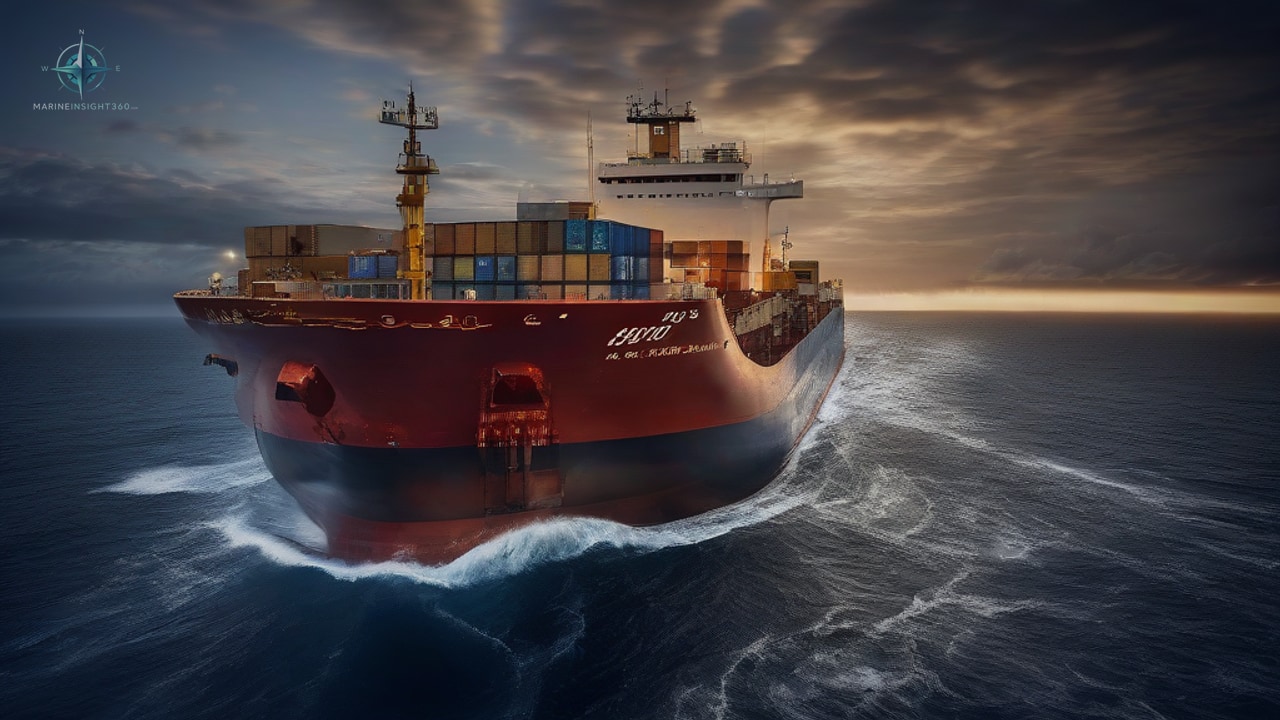
Shipping moves trillions of dollars' worth of goods every year, from fresh produce to aircraft parts, on tens of thousands of merchant ships ranging from small coasters to giant heavy lift vessels. Besides container ships, one of the biggest groups is the bulk carrier, and within that group the Supramax is one of the most common sizes.
Bulk carriers carry large quantities of loose cargo without packing it into units the way container ships do. The Supramax is a mid-sized bulk carrier: small by bulk carrier standards, but one of the busiest workhorses in world trade. This article looks at bulk carriers in general and then at the design, equipment and operation of Supramax ships.
Bulk Carriers
Bulk cargo is cargo carried loose and unpackaged, measured by weight or volume. Container cargo is the opposite: it is counted in units, such as boxes, pallets and cartons, packed inside containers. Packaged goods such as drinks, electronics or fresh produce need protection from crushing, chafing and temperature changes, so they travel in boxes or on pallets inside the container, and refrigerated containers keep perishables cool. Container ships therefore carry goods that need to stay packed and protected.
How Do You Transport An Incalculable Commodity, Say, Rice?
Nobody counts rice by the grain; it is measured by weight. Packing it into bags and loading the bags into containers takes time and material and adds cost, and loose grain in a container would work into every gap and shift on passage.
For large quantities it is far easier to pour grain, ore, coal or cement straight into the holds of a bulk carrier. The cargo goes into holds below the deck through large hatches, and is loaded and discharged by shore equipment or by the ship's own cranes. Bulk carriers are grouped into size classes, often named after the canals or ports that limit their dimensions.
From small to large, the main ones are Handysize, Handymax, Supramax, Ultramax, Panamax, Kamsarmax, Capesize and the very large ore carriers known as Valemax or Chinamax. (Names such as Aframax and Suezmax are used mainly for tankers, and Q-Max for Qatar's LNG carriers.)
Supramax Cargo Ships
The terms Handymax and Supramax are often used together, but they cover different sizes. Handymax ships are roughly 40,000 to 50,000 deadweight tonnes (DWT), Supramax ships roughly 50,000 to 60,000 DWT, and the newer Ultramax ships about 60,000 to 65,000 DWT. Deadweight is the total weight a ship can carry, including cargo, fuel, fresh water, stores and crew, but not the weight of the ship itself.
Supramax ships are popular because they are big enough to be economical but small enough to use most of the world's bulk ports. A typical Supramax is around 190 to 200 meters long and is among the most numerous bulk carrier sizes afloat.
For example
the Panama Canal and the Suez Canal both have strict limits on the size of ships that can pass through them, which is where the Panamax, New Panamax and Suezmax classes come from. A Supramax fits through both canals easily. Most Supramax ships have five holds, so they can carry more than one cargo on a voyage. It is common, for example, to load some holds with one grade of ore or grain and the rest with another.
Depending on the voyage, some holds may be discharged at one port and the rest at another, or the ship may part-load at several ports. That flexibility, together with their own cranes, makes Supramax ships easy to trade almost anywhere. Japanese and Chinese yards have built them in large numbers, often to standard designs, and in recent years many yards have moved on to slightly larger Ultramax designs of 61,000 to 64,000 DWT that fit the same ports.
Typical Supramax cargoes include grain, coal, iron ore, bauxite, fertilisers, cement, sugar, steel products, scrap and logs. Because almost all of them are geared, with their own cranes and grabs, they can load at small river ports and anchorages and discharge in places where a gearless Panamax or Capesize could not work at all.
That is a large part of why charterers pay a premium for them on many routes in Africa, South America and Southeast Asia, where port equipment is limited. Their holds and tank tops are usually strengthened for heavy cargoes, and many ships are fitted with removable stanchions so they can carry logs or steel on deck as well.
How is a Supramax ship designed and laid out?
Like most bulk carriers, a Supramax has its accommodation and bridge at the stern, above the engine room. The rest of the main deck is taken up by hatch covers and deck cranes. A typical ship has five holds, each with its own hatch, closed by hydraulically operated folding or side-rolling hatch covers. High hatch coamings around each opening stiffen the deck and keep water out.
Most Supramax ships have four cranes mounted between the hatches, which lets them load and discharge in ports with poor shore facilities and shortens the time they spend there.
Lifting
The cranes on a Supramax usually have a safe working load of around 30 to 36 tonnes and are often fitted with grabs for bulk cargo. In terms of dimensions, Supramax ships are usually about 190 to 200 meters long, about 32 meters wide and 18 to 19 meters deep, with a summer draft of around 12 to 13 meters.
A typical modern design is about 199 meters long, 32 meters wide and 18.8 meters deep, with a draft of a little over 12 meters. The engine room is aft, below the accommodation, and the main engine drives a single shaft and propeller. The usual main engine is a slow-speed two-stroke marine diesel driving a fixed-pitch propeller, while four-stroke engines with controllable-pitch propellers are more common on small craft and smaller cargo ships.
Operation of Supramax Ships
A Supramax usually carries a crew of about 20 to 25, depending on the flag, the company and the trade. There are typically eight officers: the master, the chief officer, second and third officers, the chief engineer and second, third and fourth engineers, plus deck and engine ratings and catering staff. Most Supramax ships trade on the spot or short-term charter market, so their routes follow supply and demand. A ship that carries ore one way may carry grain on the way back. Because of their size they face few restrictions on canals, locks or ports. Going from the Atlantic to the Pacific, for example, they can use the Panama Canal instead of sailing round South America.
Similarly, between Europe and Asia they can use the Suez Canal instead of going round the Cape of Good Hope, when it is safe and economical to do so. Time in port is another important factor in choosing a shipping route. Bulk carriers spend much longer loading and discharging than container ships, which may turn round in less than a day at a modern terminal, while a bulk carrier can spend several days in port. Their own cranes help when shore equipment is limited, but bulk cargo handling remains one of the slower operations in shipping.
Recommended Reading
Diwali at Sea: Far from Home, Together as One Crew
What Diwali looks like on a merchant ship: a crew of different faiths and nationalities celebrating together, thousands of miles from home.
Ramadan at Sea: Fasting, Prayer and Watchkeeping for Muslim Seafarers
A practical guide to Ramadan on board: fasting and watchkeeping, rest hours, suhoor and iftar timings across time zones, galley, prayer and Eid.
Ship Earthing Systems: Insulated Networks, Bonding and Earth-Fault Monitoring
Why ships use insulated electrical systems, how earth faults are found, high-voltage resistance earthing, bonding, tanker rules and shore power.