
Types Of Ships - The Ultimate Guide
Types of ships are grouped by size, function and specialization, from cargo and container ships to passenger cruise liners and ferries, naval vessels such as aircraft carriers and destroyers, and specialized ships like…
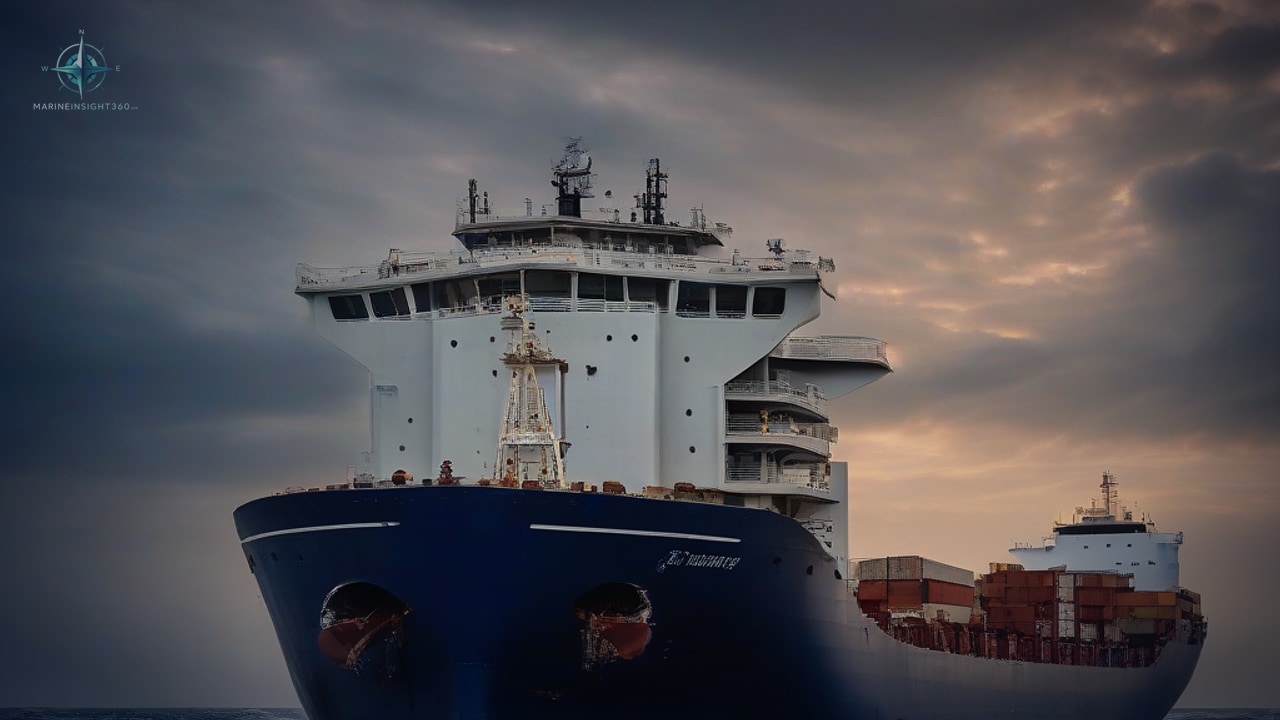
Types of ships are grouped by size, function and specialization, from cargo and container ships to passenger cruise liners and ferries, naval vessels such as aircraft carriers and destroyers, and specialized ships like icebreakers, research vessels and tankers.
Introduction to Ships
Ships have carried goods, passengers and armies across the sea for thousands of years. The change from wooden hulls driven by oars and sail to steel ships driven by diesel engines followed advances in shipbuilding, engineering and naval warfare.
This guide sorts ships by size, function and specialization, from small boats through cargo ships to aircraft carriers and research vessels, and gives a short account of how each type developed and where maritime transportation is heading.
Before charts and compasses, sailors crossed open water by reading the sky, and the stars kept their importance for celestial navigation well into the satellite age.
Importance of Ships in Transportation
Ships carry most of the world's trade by volume. Crude oil, iron ore, coal, grain, cars and almost every manufactured product in a shop have spent part of their journey at sea, because no other transport moves that much cargo as cheaply over long distances.
Basic Components and Terminology
A few terms come up in every ship type. The bow is the front and the stern the back; port is the left side looking forward and starboard the right. The hull is the watertight body of the ship, and the keel runs along the bottom as its backbone. The superstructure or accommodation block holds the bridge and crew quarters, and the engine room sits low in the hull, usually aft.
Freeboard is the height from the waterline to the main deck, and draught is the depth of hull below the waterline.
Historical Evolution of Ship Types
Ship types changed as builders found stronger materials and better ways to drive a hull through the water: muscle, then wind, then steam and diesel.
Ancient and Medieval Ships
Egyptians built plank and reed boats for the Nile and the coast. Phoenician and Greek galleys used banks of oars with a square sail for a following wind. Viking longships were clinker built, with overlapping planks, light enough to beach and sturdy enough to cross the North Atlantic. Chinese junks had battened sails and a stern rudder centuries before European ships, and the medieval cog brought the stern-post rudder to northern European trade.
Age of Exploration and Naval Warfare
In the fifteenth and sixteenth centuries, carracks and caravels carried European explorers across the oceans. Columbus sailed in 1492 with one carrack, the Santa María, and two caravels. Galleons followed, carrying both cargo and guns, and by the eighteenth century navies fought with ships of the line, large sailing warships with two or three gun decks.
Classification of Ship by Size and Function
Ships are classed in two main ways: how big they are and what they are built to do.
Size Categories: Small Boats to Supertankers
Merchant ships are often named after the waterways they fit. Panamax ships were the largest that could pass the original Panama Canal locks, and Suezmax tankers the largest that could transit the Suez Canal loaded. Bulk carriers run from Handysize through Supramax and Panamax to Capesize, ships too big for the old canals that had to go round the Cape of Good Hope or Cape Horn.
Tankers above about 200,000 deadweight tonnes are Very Large Crude Carriers (VLCCs), and those above about 320,000 tonnes are Ultra Large Crude Carriers.
Functional Categories: Cargo, Passenger, and Military
By function, ships split into cargo ships, passenger ships, naval vessels and specialized ships such as tugs, dredgers, icebreakers and offshore supply vessels. Many ships mix roles: a ro-pax ferry carries both passengers and trucks, and a naval replenishment ship is a tanker that refuels warships at sea.
Merchant Vessels: Cargo and Container Ships
Merchant vessels carry world trade. The main types are bulk carriers for dry cargo such as ore, coal and grain, tankers for liquids, container ships, general cargo ships, ro-ro ships for wheeled cargo and car carriers.
Overview of Cargo Ship
A bulk carrier loads loose cargo straight into its holds through large hatches, and many carry their own cranes so they can work at ports without shore gear. Tankers split into crude carriers, product tankers for refined fuels, chemical tankers and gas carriers for LNG and LPG. General cargo ships still carry steel, machinery, bagged cargo and project cargo that does not fit in a container.
Role of Containerization in Modern Shipping
Containerization began in 1956, when Malcom McLean's converted tanker Ideal X carried 58 containers from Newark to Houston. Standard boxes meant cargo no longer had to be handled piece by piece, and loading times fell from days to hours. Container ships are measured in TEU (twenty-foot equivalent units), and the largest now carry more than 24,000 TEU.
Passenger Ships: Cruise Liners and Ferries
Passenger ships range from luxurious cruise liners to small harbour ferries. Ferries run fixed routes on schedules, often carrying vehicles too, while cruise ships sell the voyage itself as a holiday.
Evolution of Passenger Vessels
Before air travel, ocean liners were the only way to cross the Atlantic, and they competed on speed. When jet airliners took over in the late 1950s and 1960s, the industry moved to cruising, and ships grew to hold thousands of passengers.
Features and Amenities on Cruise Ships
Large cruise ships carry theatres, water parks, climbing walls, spas and dozens of restaurants. Royal Caribbean's Icon of the Seas, which entered service in 2024, is over 248,000 gross tonnes.
Naval Vessels: Aircraft Carriers, Destroyers, and Submarines
Navies operate their own family of ship types, each built for a different part of sea control.
Types of Naval Vessels
Aircraft carriers are floating airfields and the largest warships afloat. Destroyers and frigates escort them and hunt submarines and aircraft. Submarines, many of them nuclear powered, patrol submerged for months. Amphibious ships land troops and vehicles, and patrol vessels and minehunters work closer to the coast.
Roles and Capabilities in Naval Operations
Besides fighting wars, navies guard coastlines, protect shipping lanes from piracy, carry out search and rescue and deliver disaster relief, using the same ships.
Specialized Ships: Icebreakers, Research Vessels, and Oil Tankers
Specialized ships are built around one job: breaking ice, studying the ocean or carrying oil safely.
Unique Features and Functions
Icebreakers have thick, strengthened hulls with sloped bows that ride up onto the ice and break it with the ship's weight. Research vessels carry laboratories, winches, sonar and sampling gear, and many use dynamic positioning to hold station over one spot. Modern oil tankers have double hulls, so a breach of the outer shell does not spill cargo, along with inert gas systems that keep the atmosphere in the cargo tanks non-explosive.
Challenges and Considerations in Operating Specialized Ships
These ships work under extra rules. Ships in Arctic and Antarctic waters must meet IMO's Polar Code, in force since 2017, which covers hull strength, equipment and crew training. Tankers are bound by MARPOL's oil pollution rules and strict cargo-handling procedures, and their crews need specialized tanker certificates.
Future Trends in Ship Design and Technology
Ship design is changing fastest around fuel. New ships are ordered to burn LNG or methanol alongside conventional fuel, and ammonia engines are in development, as owners prepare for IMO's target of net-zero greenhouse gas emissions from shipping by or around 2050.
Emerging Technologies in Shipbuilding
Yards are experimenting with 3D printed spare parts, and some ships now carry rotor sails or rigid wing sails to cut fuel use. IMO is also writing rules for autonomous and remotely operated ships.
Designers are also reducing emissions through better hull forms, air lubrication and eco-friendly materials, because fuel is the biggest running cost of any ship and the rules on carbon keep tightening.
Recommended Reading
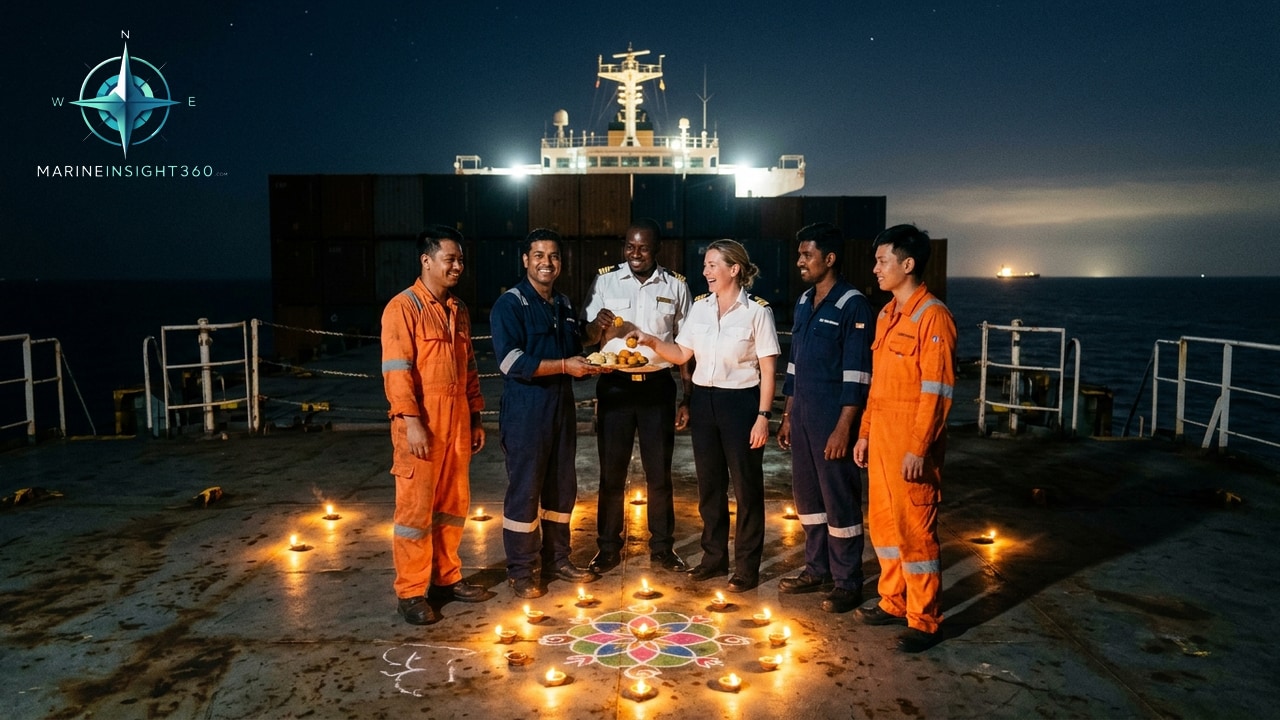
Diwali at Sea: Far from Home, Together as One Crew
What Diwali looks like on a merchant ship: a crew of different faiths and nationalities celebrating together, thousands of miles from home.
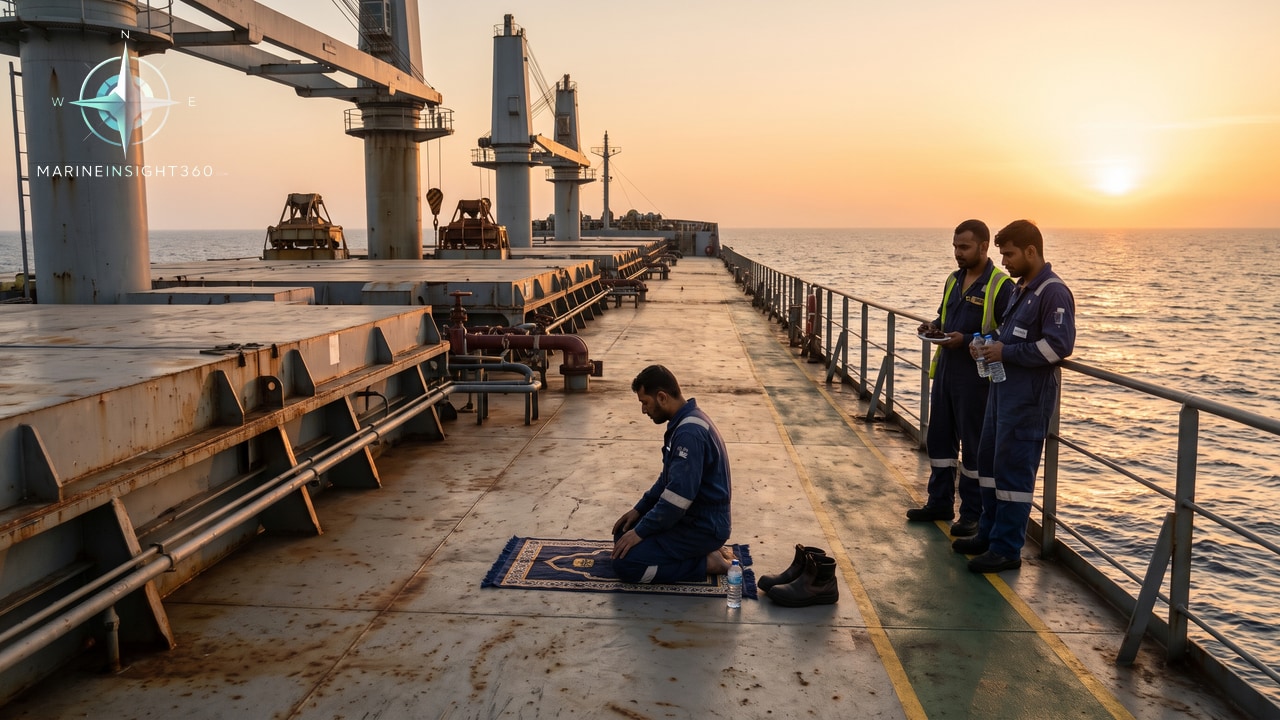
Ramadan at Sea: Fasting, Prayer and Watchkeeping for Muslim Seafarers
A practical guide to Ramadan on board: fasting and watchkeeping, rest hours, suhoor and iftar timings across time zones, galley, prayer and Eid.
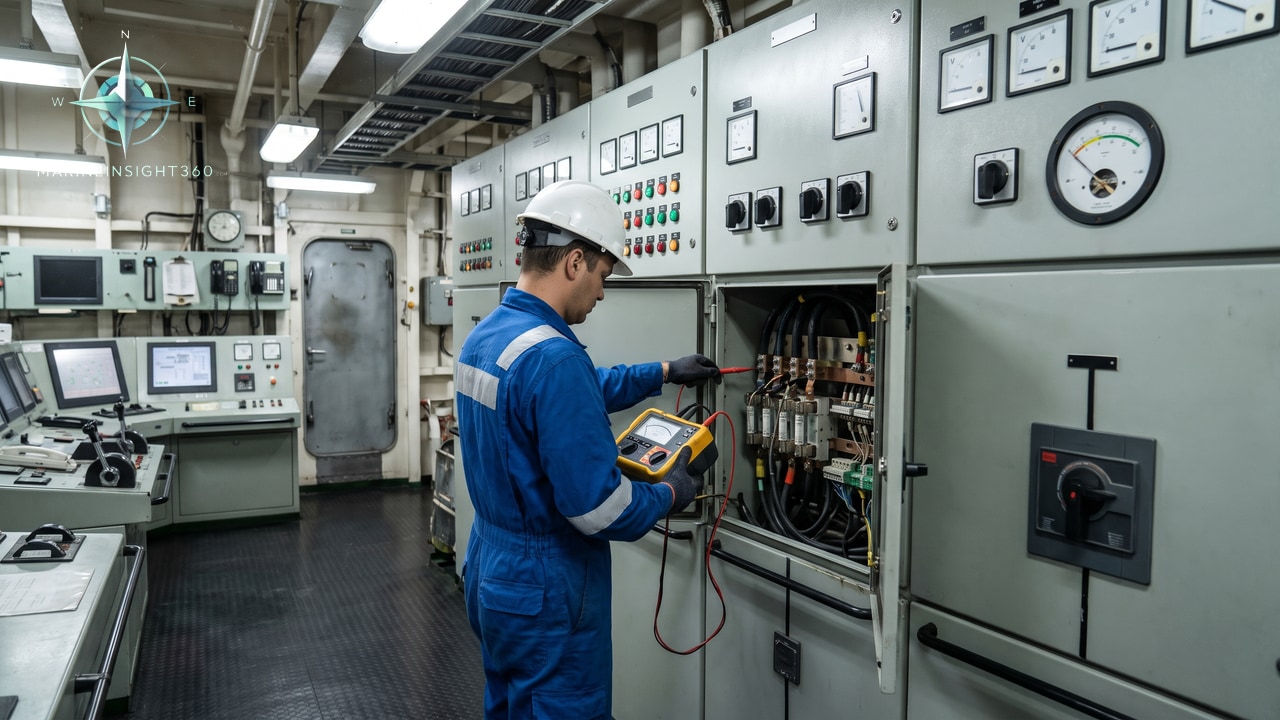
Ship Earthing Systems: Insulated Networks, Bonding and Earth-Fault Monitoring
Why ships use insulated electrical systems, how earth faults are found, high-voltage resistance earthing, bonding, tanker rules and shore power.