
How do ships generate power in sea?
Ships at sea generate their own electrical power: the source is a set of AC generators turned by the ship's engines, feeding a main switchboard that usually runs at 440 volts.
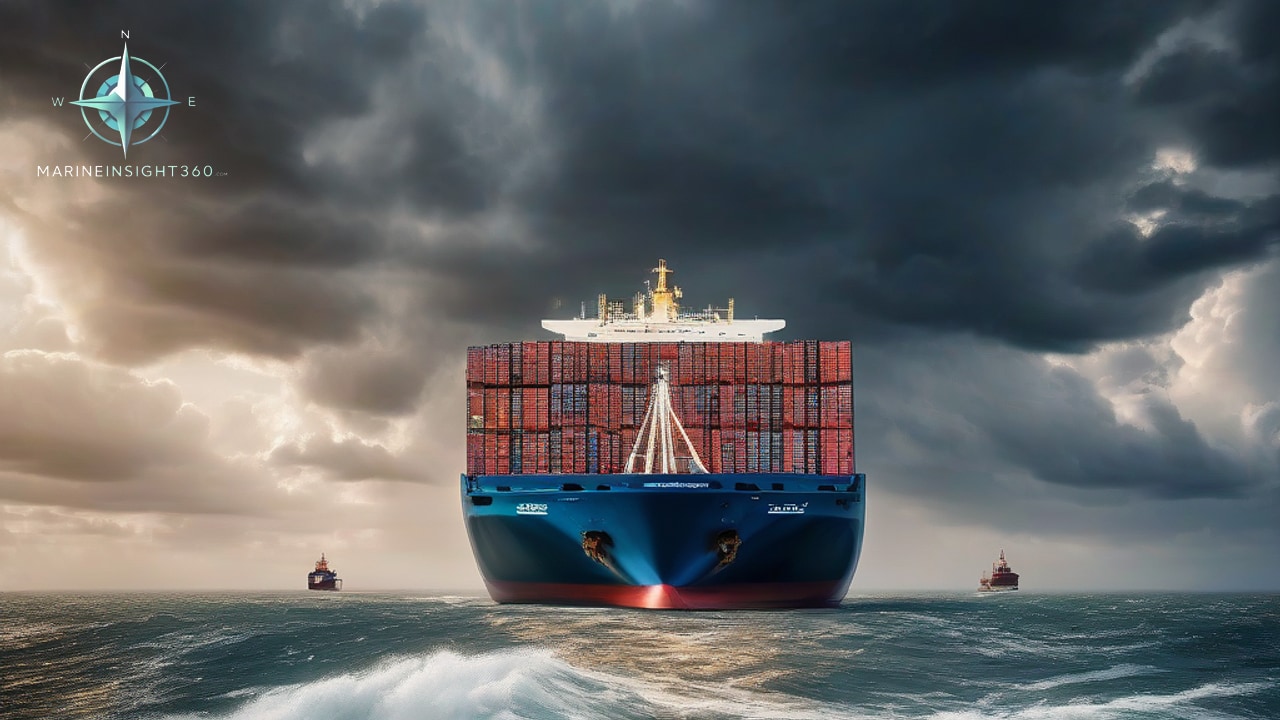
Ships at sea generate their own electrical power. A set of AC generators, usually driven by diesel engines, feeds a main switchboard that on most ships runs at 440 volts.
How do ships generate and power?
A ship at sea has to supply everything its crew and machinery need with no connection to the shore, and electricity comes first on that list. Pumps, compressors, steering gear, navigation equipment, galley and lighting all depend on it. This article explains where that power comes from and how it is distributed.
Power Generation on Board
Most ships generate electricity with diesel generators: auxiliary diesel engines each driving an AC generator, or alternator. Some ships also have a shaft generator driven by the main engine, which can supply the electrical load at sea while the auxiliary engines are stopped. The working principle of the generator is electromagnetic induction: when the magnetic field around a conductor changes, a voltage is induced in the conductor.
Generator
The generator has a set of fixed windings on an iron core, called the stator. Inside it, the rotor carries the field windings. The prime mover turns the rotor, its magnetic field sweeps across the stator windings, and an electromotive force is induced in them.
The rotor field needs a DC supply. In a brushless generator this comes from a small exciter on the same shaft with rotating rectifiers, so no brushes are needed. Older designs feed DC to the rotor through slip rings and brushes. A few points about the supply on board:
Alternating current is used instead of direct current because AC generators and motors are simpler, smaller and need less maintenance for the same output, and the voltage can be changed with transformers.
Three-phase AC is used instead of single-phase because it delivers more power for the same weight of conductor and gives three-phase induction motors a smooth, self-starting drive.
Power Distribution on Board
The power then has to reach every consumer on board safely and reliably. That is the job of the ship's distribution system.
Busbar Inspection and Maintenance
The distribution system is made up of several components that keep the supply safe and the system operation reliable, and each of them is inspected and maintained on a planned schedule. The main components are:
Ship generators, each made up of a prime mover and an AC generator.
The main switchboard, a steel enclosure that receives power from the generators and distributes it to the machinery and to section boards around the ship.
Busbars, the heavy copper conductors in the switchboard that carry the power from the generators to the outgoing circuits. Circuit breakers open automatically on overload or short circuit to protect the cables and equipment, and fuses protect smaller circuits.
Transformers step the voltage up or down. Step-down transformers supply the lighting and small power circuits, usually at 220 or 230 volts.
The main distribution voltage on most ships is 440 volts.
On large ships with heavy electrical loads, such as big container ships, cruise ships and LNG carriers, the main system runs at high voltage, commonly 6.6 kV or 11 kV.
Large motors are supplied through circuit breakers.
Smaller circuits are protected by fuses and miniature circuit breakers.
Thepower distribution system is usually a three-wire system with the neutral insulated from the hull, although an earthed neutral is also possible. The insulated system is preferred on low-voltage ship systems because a single earth fault does not trip the supply, so essential machinery such as the steering gear keeps running.
Emergency power supply
Every ship also has an emergency source of power in case the main generating plant fails. It keeps essential machinery and systems running, and it can be an emergency generator, batteries, or both.
The emergency supply must be able to run the essential services, including:
a) Steering gear
b) The emergency fire extinguishing pump
c) Watertight doors
d) Fire detection and alarm systems
e) Navigation lights and emergency lights
f) Radio, internal communications and general alarm
The emergency generator is located outside the engine room so that a fire or flood that makes the engine room unusable does not also knock out the emergency supply. It feeds its own emergency switchboard in the same room, which supplies the essential services.
What the emergency source has to do, and how quickly
SOLAS puts the emergency generator above the uppermost continuous deck, outside the machinery casings and behind its own fire boundaries, so that the flooding or fire that takes the engine room does not take the backup with it. The position is fixed by the rules, and designers cannot move it for convenience.
It also has to start without help. The set is arranged to start automatically when the main supply fails and to be connected to the emergency switchboard within 45 seconds. The weekly test the engineers run checks that whole sequence, from loss of power to the generator taking the load, and not just whether the engine starts.
Endurance is set by ship type: 18 hours on a cargo ship and 36 hours on a passenger ship, because getting people off a passenger ship takes longer than securing a cargo ship. On passenger ships a transitional supply from batteries covers the gap before the generator picks up, holding emergency lighting, alarms and internal communications for half an hour.
Why is the first earth fault an alarm rather than a trip?
The distribution described above is insulated from the hull. A single earth fault on one phase completes no circuit, so nothing trips and the ship runs on. A second fault on a different phase turns the pair into a short circuit through the structure.
Hence the earth fault lamps or insulation monitor on the switchboard, and the habit of reading them every watch. The first fault is the one there is still time to find. The engineers find it by isolating circuits one at a time, which can be planned for a quiet moment instead of being forced on a critical service at a bad one.
The same reasoning shapes how essential services are protected. A device that tripped the steering supply on a single earth fault would hand the bridge a steering failure over a fault the ship could have run with, so the arrangement warns and keeps the service alive. Preference trips do the shedding elsewhere, dropping galley and air conditioning loads before an overloaded generator opens its breaker and blacks the ship out.
Recommended Reading
What is Alternative Marine Power (AMP) or Cold Ironing?
Alternative Marine Power (AMP) is a pollution control measure that helps reduce air pollution generated by diesel generators by using shore power as an alternative energy source.
How Does A Cruise Ship Get Its Power?
Cruising has soared in popularity, captivating travelers with promises of luxury, adventure, and relaxation.
Athens Navy Power and Maritime History
As the beacon of democracy and cultural enlightenment in antiquity, Athens used exceptional maritime power that moulded the course of history.