
Do You Know What MASS Stands For?
MASS stands for Maritime Autonomous Surface Ship, the International Maritime Organization (IMO) term for a vessel that can operate to some extent without human interaction.
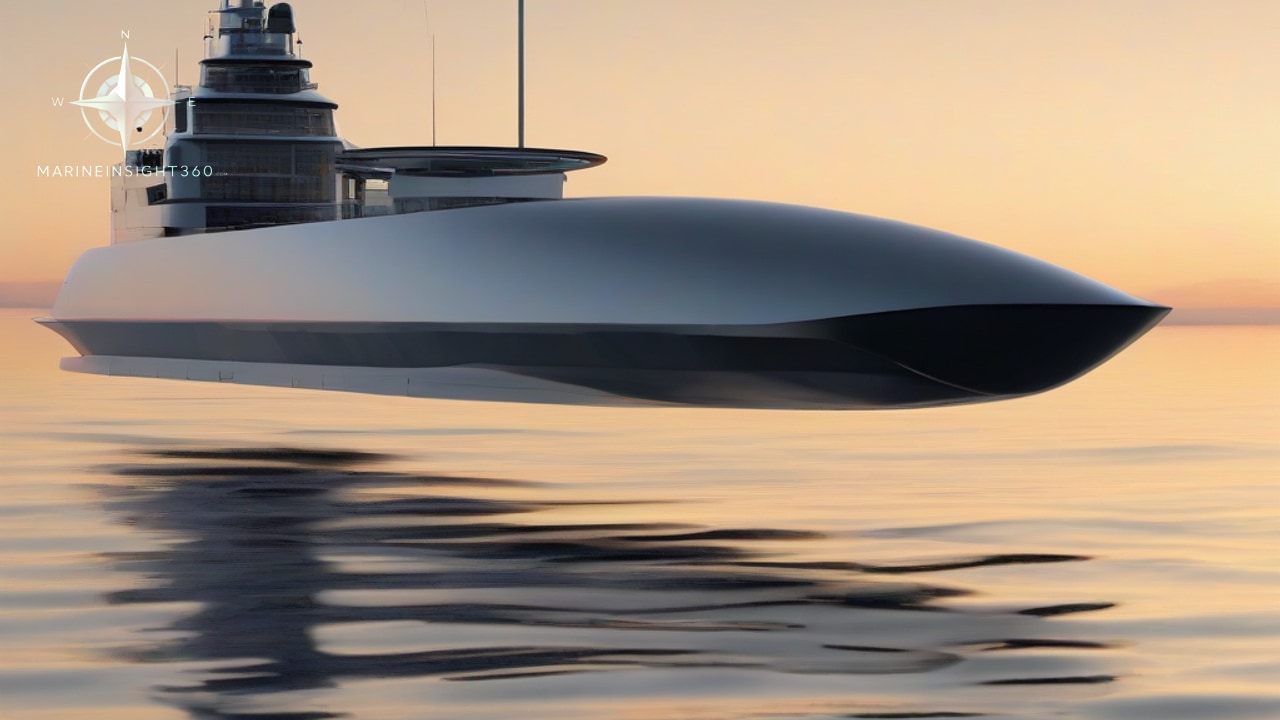
MASS stands for Maritime Autonomous Surface Ship, the International Maritime Organization (IMO) term for a vessel that can operate to some extent without human interaction. These ships are one of the bigger technical changes in maritime transportation, and if the technology and the rules mature, they could change how parts of the shipping industry work.
Advantages of MASS
The main argument for MASS is safety in maritime operations. Human error and fatigue are behind a large share of shipping accidents, and supporters argue that automated navigation and fewer people on board would reduce both.
With fewer or no crew on board, fewer seafarers would be exposed to heavy weather or to maritime security threats such as piracy. Ships without crew also need no accommodation, galley or life support for people on board, which could cut building and operating costs.
Levels of autonomy
For its regulatory scoping exercise, the IMO defined four degrees of autonomy:
- Degree one: a ship with automated processes and decision support. Seafarers are on board to operate and control the ship's systems and functions. Some operations may be automated and at times unsupervised, but seafarers are on board and ready to take control.
- Degree two: a remotely controlled ship with seafarers on board. The ship is controlled and operated from another location, but seafarers are available on board to take control and operate the ship's systems and functions.
- Degree three: a remotely controlled ship without seafarers on board. The ship is controlled and operated from another location.
- Degree four: a fully autonomous ship. The ship's operating system makes decisions and determines actions by itself.
Regulatory and safety issues
The possible gains in safety and efficiency come with new problems. Because the ships are new to the industry, regulators have had to deal with cybersecurity and safety questions that the existing rules never anticipated.
The main technical problems are building reliable sensors and software for navigation and collision avoidance, keeping communications between ship and shore secure, and protecting the whole system against cyber attack. The IMO began a regulatory scoping exercise in 2017 to see how its conventions would apply to MASS.
The exercise finished in 2021 and reviewed the main IMO conventions, including SOLAS, STCW, and COLREGs.
The IMO identified a set of high-priority issues that cut across those conventions: MASS terminology, the functional requirements of remote control centres, the role of manual operation, watchkeeping, search and rescue, and the information a ship needs to operate safely.
The Legal Committee (LEG) concluded in 2021 that the existing conventions it looks after could accommodate MASS, but that some interpretation or amendment would be needed on questions such as the role and responsibility of the master and the remote operator, liability, and certification.
The IMO's Maritime Safety Committee then developed a goal-based code for MASS. At its 111th session in May 2026, the committee adopted the non-mandatory International Code of Safety for Maritime Autonomous Surface Ships, which took effect on 1 July 2026. Flag states can use it during an experience-building phase, and the IMO plans to adopt a mandatory version under SOLAS by 2030, with entry into force on 1 January 2032. STCW covers seafarers on board a MASS but was not written with remote operators in mind, so training and certification of people working in remote operation centres is one of the areas the MASS Code has to deal with.
MASS in action
The battery-powered container ship Yara Birkeland, built by Norwegian fertiliser company Yara International with several partners, is probably the world's most famous autonomous ship project. It began commercial operation from Porsgrunn in spring 2022 with crew on board, and Yara said it would move towards autonomous operation step by step over its first two years. In Japan, between 26 February and 1 March 2022, the Designing the Future of Full Autonomous Ship (DFFAS) consortium sailed a container ship about 790 km between Tokyo Bay and Ise Bay under autonomous control, as a trial of fully autonomous operation.
The DFFAS consortium spent about a year and a half preparing for that voyage.
In mid-2023, Samsung Heavy Industries demonstrated autonomous navigation between South Korea and Taiwan on a 15,000 TEU container ship. The voyage covered about 1,500 km from Geoje, South Gyeongsang Province, past Jeju Island to the port of Kaohsiung.
In May 2023, Kongsberg Maritime completed the autonomous operation of Eidsvaag Pioneer, a coastal cargo ship in Norway, on a 160-nautical-mile voyage run from its remote operating centre in Ålesund with crew on board.
Where we stand
Autonomous ships could make shipping safer and more efficient. For seafarers, more automation on board could take routine work off their hands, which matters most on ships with small crews.
Supporters argue that autonomous systems will reduce human error, cut costs and make operations more predictable, including on long ocean passages and in remote areas.
Several obstacles remain: the mandatory regulations are still being written, cybersecurity is unresolved, and people will need new training to supervise these ships safely.
Ports, pilotage and shore infrastructure will also need investment before autonomous ships can be part of normal trade.
Recommended Reading
A Guide to Verified Gross Mass (VGM) For Shipping
The vgm full form is Verified gross mass (VGM) is a relatively new concept introduced to the maritime industry. Container weight verification is now a worldwide requirement.
Diwali at Sea: Far from Home, Together as One Crew
What Diwali looks like on a merchant ship: a crew of different faiths and nationalities celebrating together, thousands of miles from home.
Ramadan at Sea: Fasting, Prayer and Watchkeeping for Muslim Seafarers
A practical guide to Ramadan on board: fasting and watchkeeping, rest hours, suhoor and iftar timings across time zones, galley, prayer and Eid.