
How Do Ships Survive Storms?
Ships face a variety of challenges arising from varying ocean conditions. These challenges include weather changes, impacts from seawater, navigational issues, and geographical constraints.
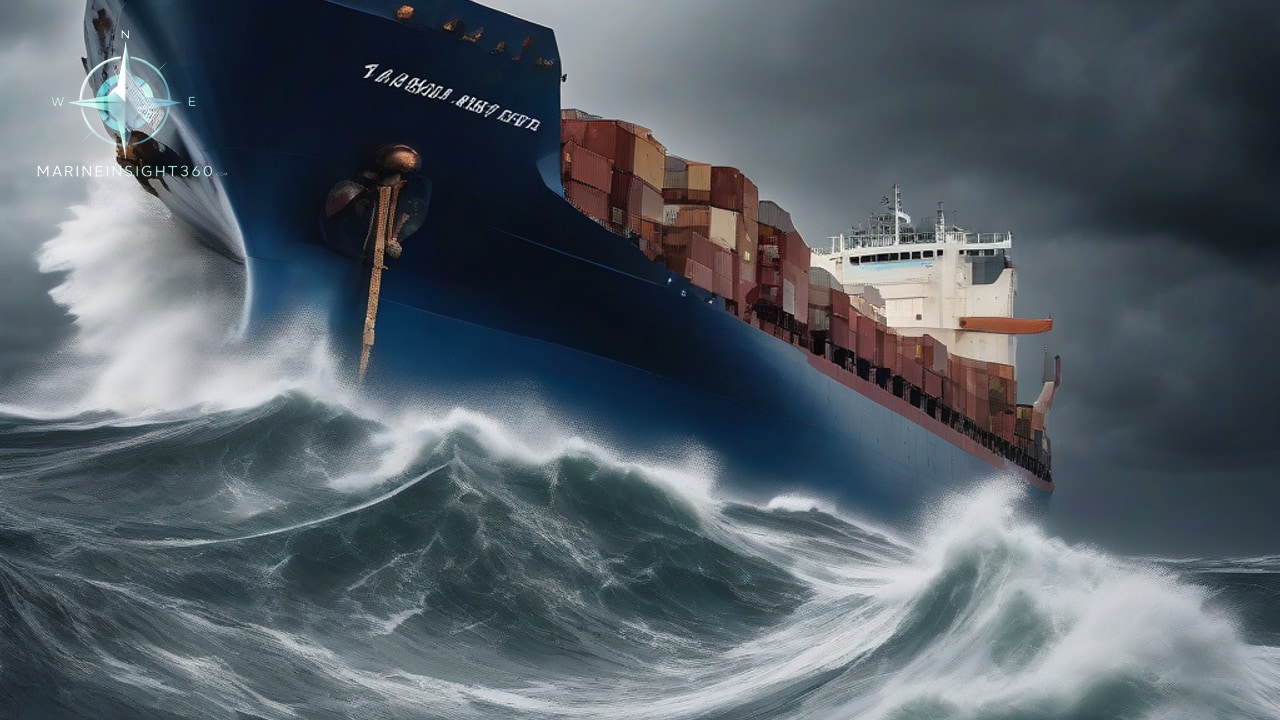
How Do Ships Survive Storms?
Ships deal with changing weather, heavy seas, navigational hazards and the limits of the waters they trade in. The biggest question most people have, though, is about their survival in storms: how does a ship get through weather that would wreck almost anything on land?
The worst storms at sea are tropical cyclones, and roughly 80 to 90 of them reach tropical storm strength around the world in an average year. Many never come near land, but they still cross busy shipping lanes.
They vary in size, strength and behaviour. A weak system may die out within a day or two, while a large one can last well over a week. Ships working in cyclone-prone waters need good weather information and the room and power to stay out of the way.
That comes down to sound seamanship, safe manoeuvring and modern communications. Considering the size of the world fleet, which runs to around 100,000 ships, the number lost each year is small: in recent years only a few dozen ships of over 100 gross tonnage have been reported as total losses annually, and only some of those to weather.
This article looks at how ships get through storms: the navigation, the design features that help them survive, and the seamanship and engineering practice that keep them going.
What causes sea storms?
Sea storms have several causes, but the big ones, tropical cyclones, are driven by warm water. When the sea surface is warm enough, the air above it is heated and picks up moisture. Depending on where they form, these storms go by different names:
- Hurricanes, in the North Atlantic and northeast Pacific
- Typhoons, in the northwest Pacific
- Cyclones, in the Indian Ocean and South Pacific
The warm, moist air rises, and as it does so the pressure at the sea surface falls.
Air near the surface flows in towards the low pressure, and the Earth's rotation turns that inflow into a spinning system around a calm centre, the eye. As more warm air rises and condenses, the storm strengthens. Coastal areas take the worst of the damage when one comes ashore. Ports in cyclone zones, such as Port Hedland in Western Australia, have cyclone procedures that send ships out to sea and close the port when a cyclone approaches.
A system is classed as a tropical storm once its sustained winds reach 39 miles per hour, and the strongest hurricanes and typhoons exceed 150 miles per hour. Those classifications are what meteorologists use when they warn ships of the danger ahead.
Tropical Cyclones
The most violent winds in a tropical cyclone are in the eyewall, the ring of cloud around the eye. Inside the eye itself the wind drops and the sky may clear, but the sea there is confused and dangerous, and the wind returns from the opposite direction once the eye passes.
In a mature cyclone, winds over 80 miles per hour can extend a long way from the centre, with torrential rain and poor visibility. Those winds raise very large waves and swell that run far ahead of the storm, and that sea state is what a ship has to survive.
Ship Survival in Storms: Navigational Factors
Better forecasting, communications and ship design mean marine accidentscaused by bad weather are far less common than they were a few decades ago.
Much of that improvement comes from the information now available on the bridge.
The Evolution of Electronic Chart Display and Information Systems (ECDIS)
The Electronic Chart Display and Information System (ECDIS) was made mandatory for most SOLAS ships in stages between 2012 and 2018, and it has largely replaced paper charts on ocean-going ships.
ECDIS shows the ship's position on the chart in real time and can overlay radar, AIS targets and, on many systems, weather data. Seeing the chart, nearby traffic and the weather on one display makes it much easier for the bridge team to work out a new route quickly when the weather forces a change of plan.
Weather Guidance
ECDIS is still only a chart. To choose a safe route, the bridge also needs forecasts.
Those come from public meteorological services and from private weather routing companies. They depend on three kinds of satellite:
- Communications satellites, to send the forecasts to the ship
- Navigation satellites, to fix the ship's position
- Remote sensing satellites, to observe the weather and the sea
Many shipping companies use a weather routing service for their ocean passages. Before departure, the second officer, as navigating officer, plans the passage to the next port, and the master approves it.
During the voyage, the routing service sends updated advice as storms develop, and the master can alter course or adjust speed, or both, to keep clear of the worst weather.
Local Weather Alerts
Ships near the coast also receive local forecasts and warnings, usually by NAVTEX and coastal radio. Waters such as those off the Cape of Good Hopeand the Gujarat coast of India can see sudden, severe changes in the weather, so the warnings there are updated frequently.
Ships have to react quickly when conditions change, which is why bridge teams pay close attention to these warnings.
In many areas, ships report to the local vessel traffic service or coastal authority before entering its waters. The authority can then follow their positions and send warnings directly when needed.
In severe weather, these warnings can also delay berthing or cargooperations. Container terminals stop crane work in high winds, and when a cyclone approaches, ports may order ships to leave and ride out the storm at sea.
Satellite Communications and GPS
Satellite tracking systems and GPSare the most widely used navigation aids. They give the ship an accurate position at all times and let the company and the authorities know where it is.
Modern satellite communications keep the ship in touch with the shore. The master can get updated forecasts, talk to the company and call for help if needed.
Satellite imagery of the storm, combined with the officers' experience, shows where the worst of the weather lies. Even when a storm cannot be avoided entirely, it helps the ship choose the least dangerous route through it.
Preparing for Storms: Ship Design Factors
Besides navigation safety standards, ship design plays a big part in surviving storms. Double hulls, introduced for tankers in the 1990s, and successive SOLAS requirements have both made ships better able to cope with damage.
Some design features matter more than others in heavy weather.
Keeping the Bow Ahead in a Storm
The bow is the most heavily strengthened part of the hull. It takes the slamming loads when the ship pitches into a head sea, so the frames forward are spaced closer together and supported by extra web frames, stringers and panting beams. The collision bulkhead behind the forepeak adds further protection if the bow is damaged.
The sides are more vulnerable. Large waves on the beam make a ship roll heavily, and if the rolling is violent enough, or the ship's stability is poor, she can be rolled past the point of recovery. That is why a ship riding out a storm usually keeps her bow, or the bow quarter, to the sea.
Transverse beams
Transverse frames, beams and web frames stiffen the hull across its width, supporting the deck around the cargo hatches, the tank boundaries and other large openings. They reduce plate bending and help the hull carry the loads imposed by the waves.
A well-designed hull flexes slightly in heavy seas without failing. The combination of transverse and longitudinal stiffening gives it strength without making it brittle.
Watertight Safety
Watertight integrity is what keeps a damaged ship afloat. The loss of the bulk carrier Derbyshire in Typhoon Orchid in 1980, with all 44 people on board, is the hardest lesson: the investigation found that her foredeck fittings and forward hatch covers failed under green water, flooding the forward spaces.
Watertight bulkheads divide the ship into compartments, so if water gets into one, the others keep her afloat and stable. Since the Derbyshire, rules for hatch covers, ventilators and air pipes on the forward part of bulk carriers have been strengthened considerably.
These measures help keep water out of the forward spaces even when heavy seas break over the bow. Good watertight subdivision is a large part of the reason ships can survive storms even after being damaged.
Steering Gear Design
The steering gear must work reliably in every condition. In a storm, the ship has to be able to hold her heading against the sea and turn when needed, and losing steering in heavy weather can quickly turn dangerous.
Under SOLAS, every ocean-going ship has a main and an auxiliary steering gear, or a main gear with duplicated power units, so a single failure does not leave her without steering. This safety system takes one or more of the following forms:
- Single failure standard
- Emergency backup steering system
- 100% redundancy
Safe Steering
The aim is that the steering always has a backup. If a pump, motor or hydraulic circuit fails, the standby equipment takes over, so the ship can keep manoeuvring safely in any load or weather condition. In heavy weather, a ship that keeps her steering keeps her options.
Good Sailing Practices for Storm Survival
Even well-built ships are still lost in bad weather, and investigations often find that decisions on board played a part. Equipment and rules only go so far; the human factor still matters most.
So the crew's skill is one of the keys to surviving a storm: seamanship, maintenance and making sure the ship is properly secured before the weather arrives.
Securing the Ship for Heavy Weather
Preparing the ship for heavy weather is routine on any well-run ship, and it starts well before the storm arrives.
Even a ship that passes well clear of a storm can meet very heavy weather, because some tropical cyclones have damaging winds 160 kilometres or more from the centre. Once the ship starts rolling and pitching heavily, anything not secured becomes a hazard.
Close and secure the ventilators, air pipe heads, hatch covers and any other openings on deck. Check the lashings on the containers and other deck cargo, because cargo that shifts can give the ship a list and make matters much worse.
Secure spare parts, stores and heavy equipment in the engine room, store rooms and galley. Loose gear that slides or falls can injure people and damage machinery or structure.
Maritime Awareness
The basic rule is to keep as far from the centre of the storm as possible, and seamen have long-established rules for doing so. Winds circulate anticlockwise around a cyclone in the northern hemisphere and clockwise in the southern hemisphere.
In the northern hemisphere, the dangerous semicircle is to the right of the storm's track: a ship there should bring the wind fine on the starboard bow and steam away from the centre, while a ship in the navigable semicircle should keep the wind on the starboard quarter. In the southern hemisphere the rules are reversed. In a following sea, the bridge must also watch for surf-riding and broaching, when the waves can swing the ship beam-on.
These decisions rest on good watchkeeping and on the experience of the master and chief mate.
Propulsion and Machinery Maintenance
Losing propulsion in heavy weather is one of the most dangerous things that can happen to a ship. Without power she falls beam-on to the sea and starts rolling heavily, and in a storm there may be no time to recover before she is overwhelmed or driven ashore.
Planned and predictive maintenance of the machinery makes such failures rare. That includes regular cleaning of fuel and lubricating oil filters, maintenance of the generators, and regular testing of the emergency generator and other emergency power supplies to make sure they work when needed.
Carrying spares for critical items, such as the elements for backwash filters, sounds basic, but it can be what keeps the engine running.
Good engineering practice before heavy weather includes changing over fuel tanks in good time rather than during the storm, and keeping the service and settling tanks well filled, so that sloshing does not uncover the suction or stir sludge into the fuel system.
Shipboard Storms
A ship's ability to get through a storm depends on many things working together: good weather information, a sound hull, reliable machinery and a well-prepared crew. Ships are still lost to weather each year, so there is room for improvement.
Climate research suggests that a warming ocean is making the most intense tropical cyclones a larger share of the total, which makes good forecasting and good seamanship more important than ever.
As ships grow larger, the tools for routing and handling them grow more capable too. Used well, they give modern ships a better chance of coming through a storm than any generation before them.
Recommended Reading
Storms are the Period of Greatest Container Loss
The vastness of the ocean has always posed challenges for seafarers. In modern shipping, a single severe storm can devastate a cargo ship, not to mention…
Diwali at Sea: Far from Home, Together as One Crew
What Diwali looks like on a merchant ship: a crew of different faiths and nationalities celebrating together, thousands of miles from home.
Ramadan at Sea: Fasting, Prayer and Watchkeeping for Muslim Seafarers
A practical guide to Ramadan on board: fasting and watchkeeping, rest hours, suhoor and iftar timings across time zones, galley, prayer and Eid.